
AlenaKehm
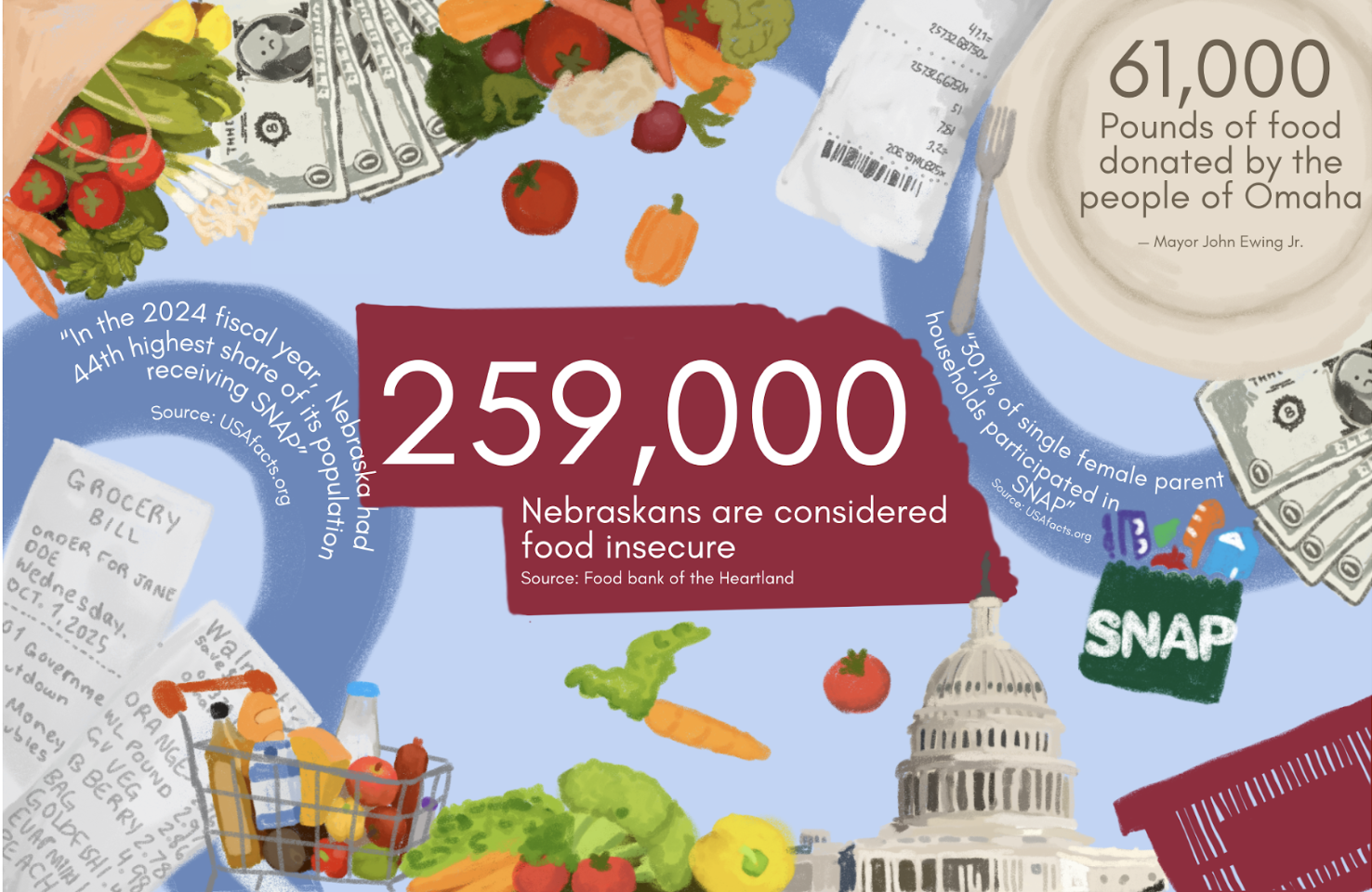
When the federal government shut down on Oct. 1, some people worried about layoffs. Others were concerned about delays for their next flight. But for 140,000 Nebraskans, their biggest worry was food.
The Supplemental Nutrition Assistance Program, better known as SNAP, provides monthly food assistance to more than 41 million low-income Americans. Due to the government shutdown, funding for November SNAP benefits was delayed, increasing food insecurity across the country.
In Omaha, city leaders took action. Mayor John Ewing spearheaded a food drive initiative called “Omaha Leads and Feeds.”

“We coordinated with the United Way, and a number of other organizations like Food Bank for the Heartland and the Omaha Community Foundation to be able to generate a food drive to help people who weren’t going to receive their SNAP benefits in November,” Mayor Ewing said.
Starting on Oct. 29, Omaha residents were invited to bring non-perishable food items to one of the 12 collection sites around the city. Over the course of a week, “we had about 61,000 pounds of food donated,” Ewing said.
Although the city-wide food collection has ended, the mayor is still asking Omaha citizens to help fight hunger. “The number one thing they can do is donate,” Ewing said. He invites financial contributions and donations of food to Food Bank for the Heartland, who will distribute it as needed.
The city encourages citizens to help this cause, but it is also pushing the effort forward directly. “The City of Omaha is donating $195,000 to the effort, the county is donating $200,000 and we have $100,000 from CHI Health, as well as other individuals donating $600,000,” Ewing said.
He believes Omaha’s community response has been impactful. “We’ve had a lot of positive feedback and gratitude,” said Ewing.
Along with their partnerships with the mayor’s office, organizations like Food Bank for the Heartland are doing their part to combat hunger. Prior to the shutdown, Food Bank for the Heartland “was experiencing historical [hunger] highs with fewer resources,” said Stephanie Sullivan, Assistant Director of Marketing and Communications. The SNAP benefit pause only worsened these issues. Without SNAP, the Food Bank lost “one of the most efficient tools…for fighting hunger,” Sullivan said. Thanks to support from Omaha and surrounding communities, some concerns around hunger have been curbed. The support from the community “serves as a reminder of the incredible difference we can make when we come together collectively to fight hunger,” Sullivan said.
After the government shutdown, Food Bank for the Heartland started a partnership with the Offutt Air Force Base food pantry to help prevent hunger among military families. They are also currently holding their “Shine the Light on Hunger” campaign, in which any money raised will be doubled up to $200,000. Sullivan encourages donations and reminds people that “we are all one emergency away from needing food assistance.”
In the Marian community, students are taking initiative as well. Operation Others hosted a “call-in day” to provide assistance to those in need. “Students from all eight Catholic high schools…set up a call center at [Creighton] Prep and answered calls all day from people in need,” said senior Operation Others Core Team leader, Sam Van Moorleghem. People in the Omaha Metro area were invited to call in and provide information that Operation Others needs to deliver a holiday meal in December.
On Nov. 12, the government reopened, officially ending the longest government shutdown in US history. In turn, SNAP benefits were reinstated across America. Although this brings relief, many are still worried. Signed into law on July 4, the “One Big Beautiful Bill” Act will change the eligibility requirements for SNAP benefits over the next 10 years.
A chief concern for the Democratic Party is that the bill will prevent many needy Americans from accessing SNAP. Despite these concerns, Republicans argue that the bill will help the American people through tax cuts for the middle and working class.
Although the future of SNAP is uncertain, many are working to ensure that people’s support for the fight against hunger is not.


Leave a Reply