
Opinion by AlainaKroll
If you roam the Quad at 7:30 on a Monday morning, you will most likely spot a sleep-deprived Marian girl chugging a caffeinated drink like her life depends on it. Alani, Starbucks refresher, plain old iced coffee—I’m sure you’ve seen it all. The possibilities are endless for overworked teenage girls to get their fix.
So where does this obsession come from? First of all, it’s important to know that caffeine is quite literally a drug. It is a stimulant that increases adrenaline and cortisol while blocking adenosine, the neurotransmitter in your brain that prompts sleepiness and drowsiness. This means that you are temporarily not feeling your exhaustion, leading to an energized feeling. However, when the effect wears off in a few hours, you are often left feeling even more sluggish than before.
Although caffeine can be cotton candy or coffee flavored, man-made or natural, carbonated in a can or steeped in a teapot, it all has a similar effect on the body.
100 mg—the amount in a cup of coffee—is enough to make you feel more awake and focused. The standard dose of caffeine in popular energy drinks (Alani Nu, Celsius, Prime, C4, Ghost and “5-Hour Energy” shots) is 200 mg, which is enough to block adenosine, improve alertness, increase heart rate, cause a jittery feeling and impact sleep. The caffeine limit for the average adult is 400 mg per day, but it is not recommended for teenage girls to surpass 100 mg.
Daily exposure to excessive amounts of caffeine can take a toll on your body. It can increase blood pressure, cause heart palpitations, make you shake, increase anxiety and lead to digestive issues. Not to mention it confuses the body’s circadian rhythm (natural sleep-wake cycle), ruining your sleep schedule and even causing insomnia.
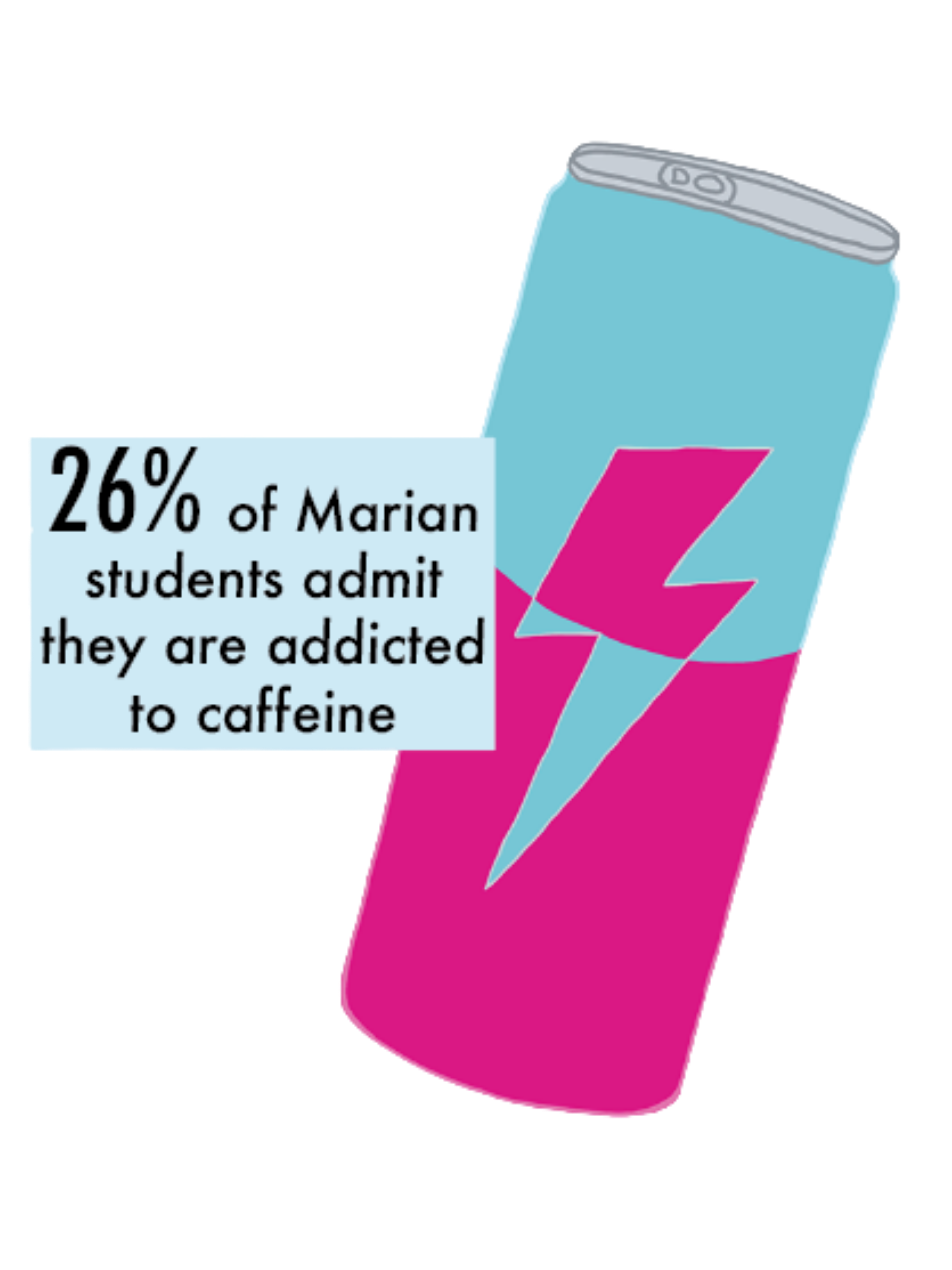
Around 26% of Marian students admit that they are addicted to caffeine, with 14% drinking one or more energy drinks per day, according to responses on the Network’s Google survey this month. One of the most harmful facts about caffeine is that your body builds a tolerance to it. The more you drink, the higher your tolerance, the more you need to consume in order to feel “awake,” the higher the strain on your mental and physical health.

However, cultures around the world center their social lives around caffeine. “Going out for coffee” is a common way to spend time with friends in the U.S., while a shot of espresso after meals is the norm in Italy. Tea is the favored caffeinated drink of choice across Asia and certain Middle Eastern countries. Not to mention, the majority of the world’s coffee beans are grown in the South and Central Americas.
Whatever the culture, people around the globe use caffeine as a way to sit down and bond with loved ones.
Therefore, don’t be scared of drinking caffeine. When used correctly (in small doses), it can be a tool to improve mood, increase energy and aid sports performance. You can absolutely go out for a coffee with your friends or drink it if you know you have a long night of studying ahead of you.
Each person has their own tolerance, and it’s important to remember yours and stick to it. Just don’t make it a habit to drink excessive amounts daily—be conscious of what happens to your body when you use it recklessly.




Leave a Reply