
Opinion by CoventryThompson
I am willing to bet that all of you were taught about Christopher Columbus early in elementary school. If I were to guess, based on my experience, most of our teachers told the tale of Columbus sailing the ocean in 1492, discovering the Americas and bringing back news of his brilliant discovery to the Spanish royalty.
This is the story I was taught for many years. The darker aspects of this part of history were never fully revealed to me in a classroom setting. I put the bits and pieces of the true story of Columbus’ voyage to the Americas and the impacts his discovery had on indigenous communities all over North and South America together over many years.
“The darker aspects of this part of history were never
Coventry Thompson ’25
fully revealed to me in a classroom setting.”
Whether or not Columbus Day should be replaced with Indigenous Peoples’ Day has sparked conversation over the past few years, with many Indigenous communities pushing for their culture and history to be honored, instead of the man whose discovery of the Americas led to an almost total eradication of their culture.
First, when it comes to celebrating Columbus Day, it’s important to understand the difference between celebration and acknowledging history.
Columbus and the impacts of his venture to the Americas changed the course of history, as it ultimately led to the society we live in today; so of course, Columbus’ sail to the Americas should be taught in history class. However, learning about historical facts and their impacts on the modern world is not the same as celebrating a historical figure.
Celebration implies that someone has had a significant positive impact on society. Although his discoveries have arguably had some positive impacts, many of the negative effects of his discoveries are not worthy of celebration.
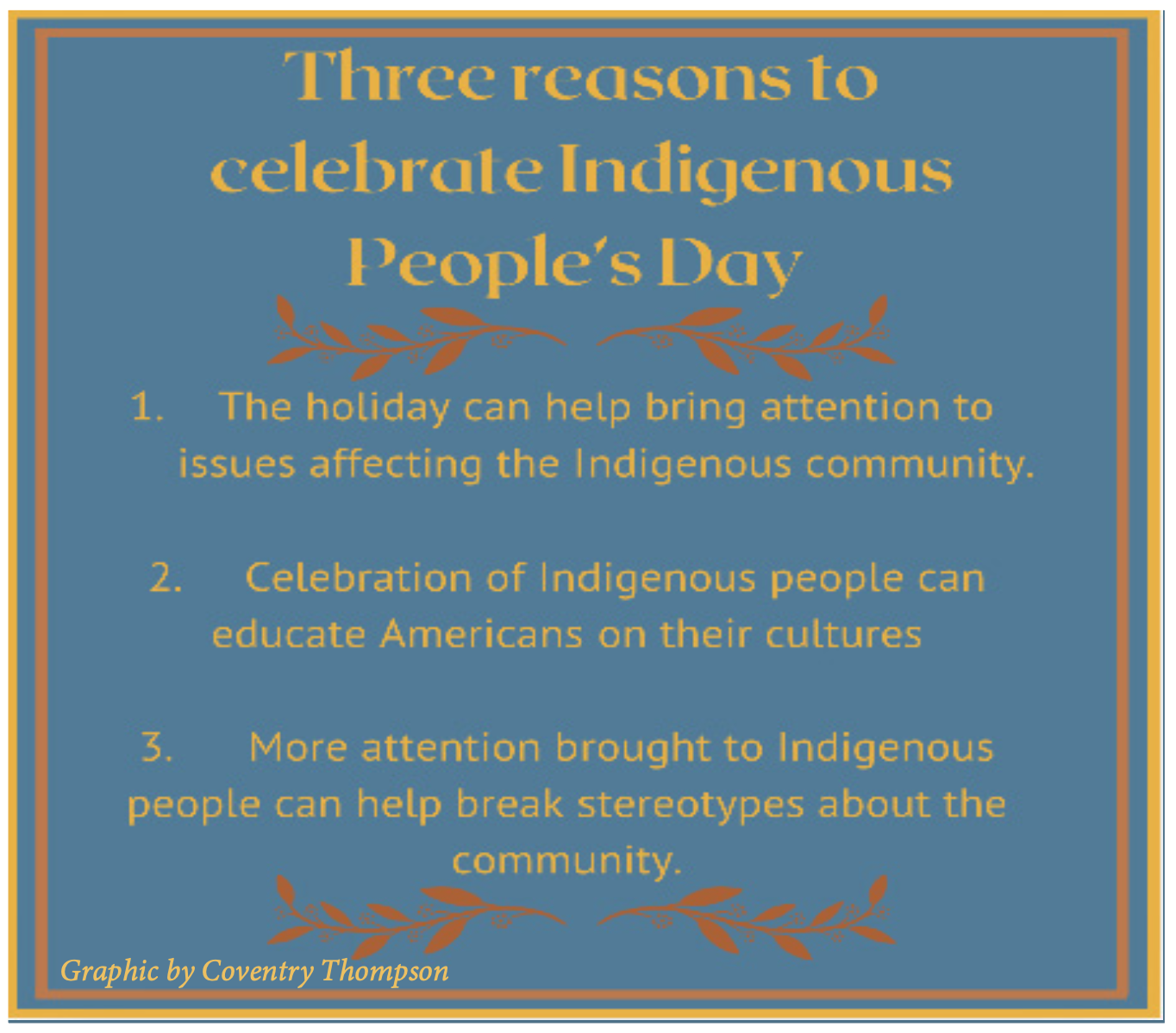
Secondly, replacing Columbus Day with Indigenous Peoples’ Day would allow more Americans to learn about the darker aspects of Columbus’ history and the impacts he had on Indigenous communities. Indigenous communities experienced a significant loss of culture and identity because of European colonization that they are still trying to regain.
Indigenous People’s Day is currently only celebrated in three states: Alaska, Oregon and Vermont. Expanding the celebration to all 50 states would allow more Americans to be educated on the history, culture and traditions of America’s First People.
Many Americans are not educated on Indigenous cultures or the issues they face. Stereotypes, cultural appropriation and the belief that Indigenous cultures are an uncivilized thing of the past are still common in America. Having a day that is solely dedicated to educating and appreciating these cultures could help mitigate some of these issues.

Younger Americans are more likely to view Columbus unfavorably, according to YouGov.com in 2024. Only 40% of people under 45 view him favorably, 39% view him unfavorably, and 21% have no opinion. On the other hand, 68% of Americans 65 or over view Columbus favorably.
Meanwhile there is growing support for Indigenous Peoples’ Day celebrations.
Finally, replacing Columbus Day with Indigenous Peoples’ Day does not mean erasing Columbus from history or denying his impact; it also does not mean villainizing him beyond honestly addressing the harm he has caused Indigenous people.
The story of Columbus should simply stay in the classroom, and the focus of the celebration should be shifted to the underappreciated Indigenous peoples of America.



Leave a Reply