
LucyKalkowski
Unlike any other cultural heritage month, Hispanic Heritage Month occurs in between two months. It starts on Sept. 15 and continues through Oct. 15, an extension from a previous week-long celebration.
According to the National Museum of the American Latino, these dates are not coincidental, but coincide with many Central American independence days, such as those in El Salvador, Honduras, Guatemala and Nicaragua.
Hispanic traditions are not limited to a month-long remembrance and celebration of the culture, but occur year round. Senior Valeria Banderas Morales practices numerous traditions with her family.
“Instead of Christmas, we have a tradition called Los Reyes Magos, which represents the day the three wise men gave gifts to Jesus when he was born. Children leave their shoes overnight waiting for a visit from the wise men. Their parents are usually the ones who put gifts in their shoes. Then in the morning, the kids’ shoes will have gifts for them,” Banderas said.
The celebration of the three kings who delivered the gifts of gold, frankincense and myrrh occurs on Jan. 6. It comes with food like Rosca de Reyes-an oval-shaped food that symbolizes a crown and has a small doll inside that represents Jesus.
The Rosca de Reyes is divided up among the family and the person who has the piece with the small doll in it is in charge of making tamales for the next occasion, Día de la Candelaria on Feb. 2.
Having grown up surrounded by Hispanic culture, junior Ruby Scanlan has incorporated many Hispanic traditions in her own life by attending parades, quinceañeras and setting up ofrendas.
“My most memorable and favorite tradition is making an altar for those who passed away for Día de los Muertos, because it gives me time to reflect and think about these people and their stories and how they have helped shape my life to this day,” Scanlan said.
Día de los Muertos, or Day of the Dead, is celebrated on Nov. 1 and 2, an important celebration in Hispanic culture.
“You make an ofrenda to welcome the person who is not present anymore, you usually start by adding a picture of the person you’re honoring, their favorite dishes, candles and objects they liked. If someone enjoyed soccer, then you can put a soccer ball because it was something important in their life. You can also add in flowers and calaveras,” Banderas said.
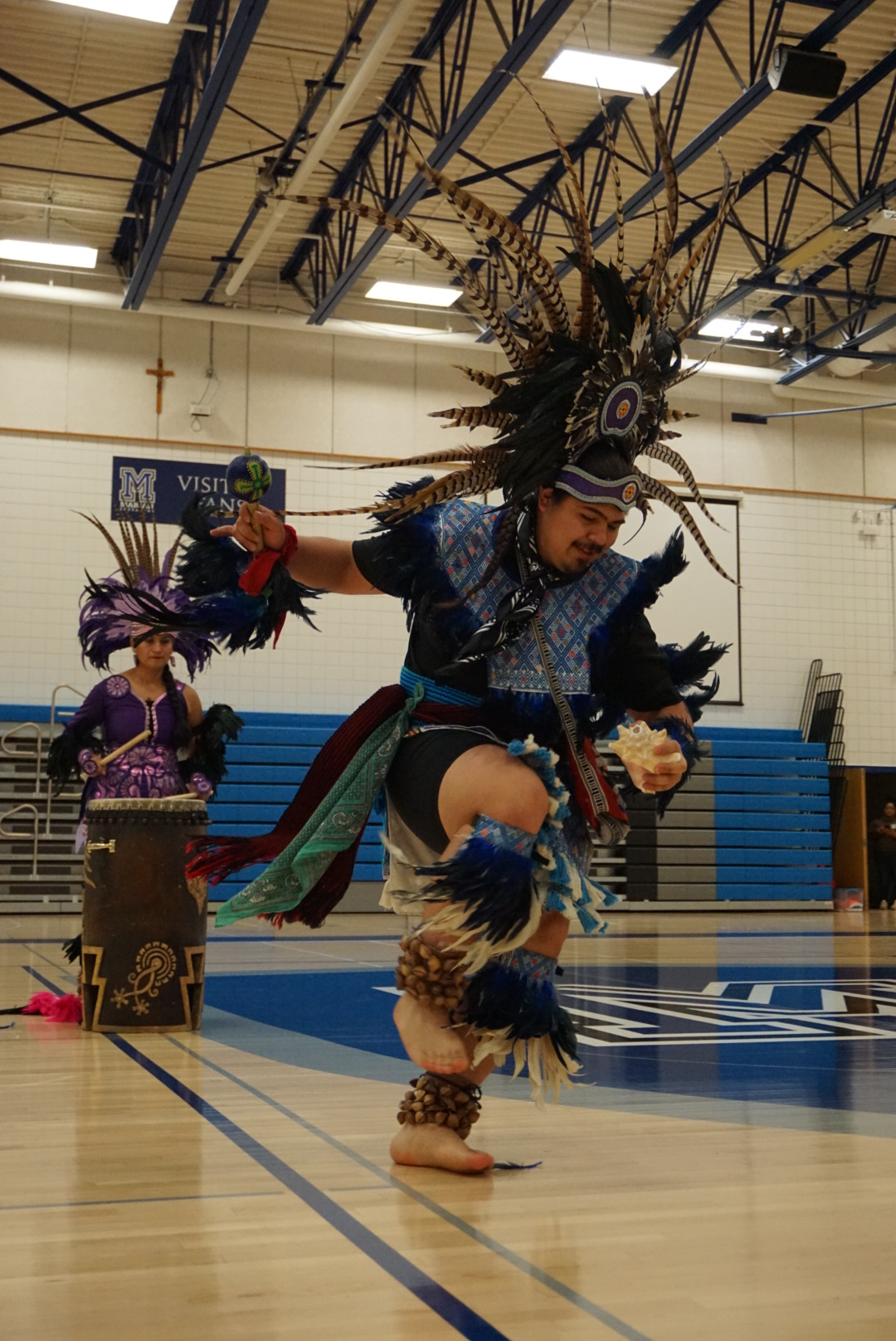
Banderas was enthusiastic to learn that the Sept. 12 Crusader Activity Block (CAB) was about her culture.
“When I heard that we were gonna have a CAB, I was actually excited because I felt like I didn’t really know that much about [the Mariachi dancers],” she said.
Banderas felt something stir inside her during that CAB. “After I saw the CAB and the dancers, it really motivated me to show my culture…So I decided to take classes so I can learn dances and gain a little more knowledge,” she said.
During Hispanic Heritage Month and all of the rest of the cultural heritage months, it brings an opportunity for others to educate themselves on traditions from around the world.
“I think it is important so we can learn to appreciate and respect other cultures, beliefs, and values other cultures have. It will make your life more diverse and it’s fun to recognize different traditions,” Scanlan said.
Expanding horizons, Marian’s Diversity Board continues to plan cultural diversity CABs so that Marian girls can experience cultures that exist within the school community.




Leave a Reply