
AbbyMcGuire

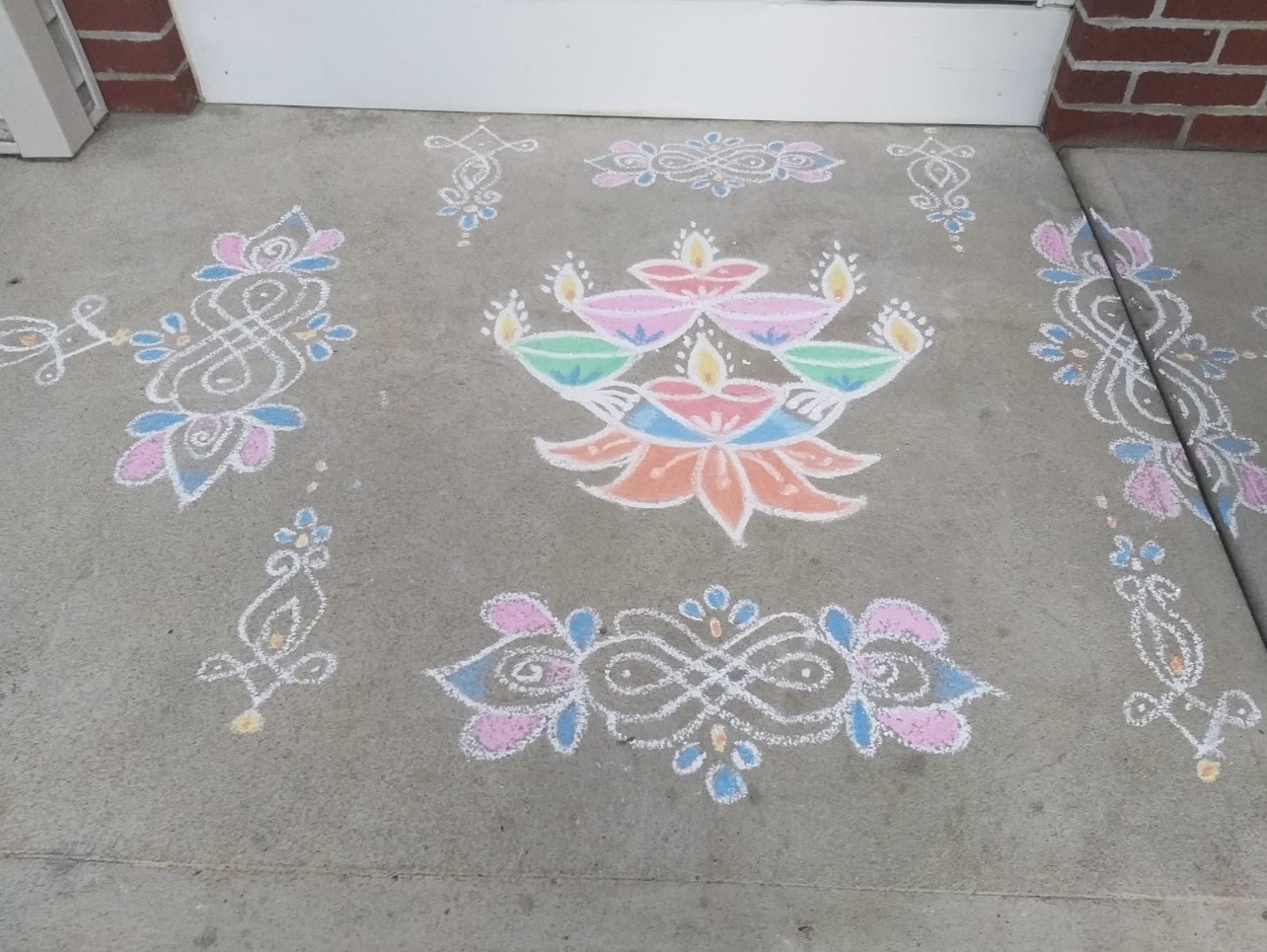
This Halloween, a holiday celebrated for the dark and spooky, there will be immense light. That’s because Diwali falls on October 31st and November 1st this year. First, let’s get the pronunciation misconceptions out of the way. Diwali is pronounced “D-vaul-e”, not “Di-wall-i”. The majority of the Marian community is Catholic, but that doesn’t mean other religions and cultures should go unnoticed, especially when people within our community participate in these cultures. Vasudha and Vandana Santhanam are two Hindi sophomore students. Diwali has impacted them by giving them the opportunity to meet other Hindus in America.
“It’s the one holiday that every Indian knows about and every Indian celebrates, and it connects us to our culture,” Vasudha said.
Diwali is the festival of light where Hindus celebrate the triumph of good over evil. Vandana explained how different regions of India have their own variations of the Diwali traditions and reasons for celebrating. The Santhanam family is from Southern India, and their Diwali celebrations follow in the tradition of the Mahabharata. The Mahabharata is one of the major epics in Hinduism, and it tells the story of five good people and their 100 evil cousins, and their fight to rule the kingdom. One of their gods comes down in human form in order to help them save the kingdom from the evil cousins, and good prevails over evil.
Freshman Raeva Bhatia is part of the Northern Indian culture, and although her Diwali experience is different from Vandana and Vasudha, it is just as impactful, “So, there’s hundreds of people and everyone’s just around. There’s a little tray and it has a light in it. We go around in circles and you make a circle to pray over the gods. Then you ask for the blessing and then eat, obviously, because food is love,” Bhatia said. Diwali brings families together and is a bonding time.
Diwali is traditionally a five day celebration, but Vandana explained how her family does their own variation, “We just do one to three days. And during those days, my mom makes a lot of Indian sweets, and we also try not to eat any outside food.” The festival itself is beautiful, with everyone dressing up and lighting candles to celebrate life.
Bhatia and her family usually only celebrate Diwali for one night, “We just do one big night, but it spreads into all five days, and you just light oil lamps and candles,” she said. Diwali is focused on bringing families together, and is viewed as the Hindi version of the Christian Christmas.
For Raeva, Diwali is a break from the stress of everyday life, “It’s like Christmas. So just being together, being with family, time to slow down. It’s the holidays, you know, just everything you could possibly imagine. Very comforting, warm and cozy.”
At first glance, it might seem like Hinduism and Catholicism are such different religions it doesn’t make sense to compare them. However, they are a lot more similar than they appear to be. Vasudha emphasized that although there are differences between Catholicism and Hinduism, they have a lot of similarities too.
“A lot of the moral beliefs between Catholicism and HInduism are sort of the same,” Vasudha said.
Bhatia agreed with Vasudha’s point. “Honestly, I feel like they just practice the same thing, like the blessing and just believing in a higher power. Just believe and trust and have faith and believe everything will fall into place, and everything happens for a reason. My Dad was saying Christianity and Hinduism, they kind of believe in the same thing…from the people I’ve talked to, it sounds pretty true.”
However, both Vasudha and Vandana believe that Marian could do more to educate students about their culture as well as things that are happening outside of Marian and Omaha. Bhatia agrees, and urges Marian girls to abandon any harmful stereotypes about Indian people they may have. Southern Indians and Northern Indians have different cultures and religious traditions, so just grouping them together is harmful.
Diwali is a celebration of good triumphing over evil that unites families and brings the Hindi community together. Learning about different religions and cultures can help bring the community closer together, and creates a more accepting environment for all students.


Leave a Reply