IzzyCampie The transition from middle school to high school is a major adjustment for any student, but for athletes, it brings a unique set of challenges. “The transition has been challenging, but very rewarding.” freshman Josie D’Agosto said. The increased intensity, both on and off the court, was more than she initially anticipated. “I…
The transition from middle school to high school is a major adjustment for any student, but for athletes, it brings a unique set of challenges.
“The transition has been challenging, but very rewarding.”
freshman Josie D’Agosto said.
The increased intensity, both on and off the court, was more than she initially anticipated. “I didn’t realize how much more competitive and how big of a commitment it was truly going to be compared to middle school volleyball,” D’Agosto said.
High school athletics push freshmen to adapt quickly. One of the biggest differences D’Agosto noticed was the increased level of competition. Unlike middle school, where athletes are grouped by grade, high school teams feature players from all levels, meaning freshmen are competing for positions and playing time alongside upperclassmen.
“The level of competition is so much higher because athletes in all grades are competing for the same spot or team, so your position and playing time is never guaranteed,” D’Agosto said.
This increase in competition is not limited to volleyball; it is a reality in all high school sports.
The Freshman volleyball team coach Molly Pettit ’12 said that one of the biggest adjustments freshmen face is the sheer increase in time commitment.
“The move from practice one to two days a week in middle school to five days a week in high school, plus matches and weekend tournaments, can be overwhelming,” Pettit said.
In addition to the time commitment, D’Agosto also noticed a shift in responsibility. As a high school athlete, she quickly realized that leadership and accountability are no longer just the coaches’ job.
“The biggest difference I’ve noticed is now having to be the one to hold your teammates accountable and disciplined instead of it being the coach’s job,” D’Agosto said.
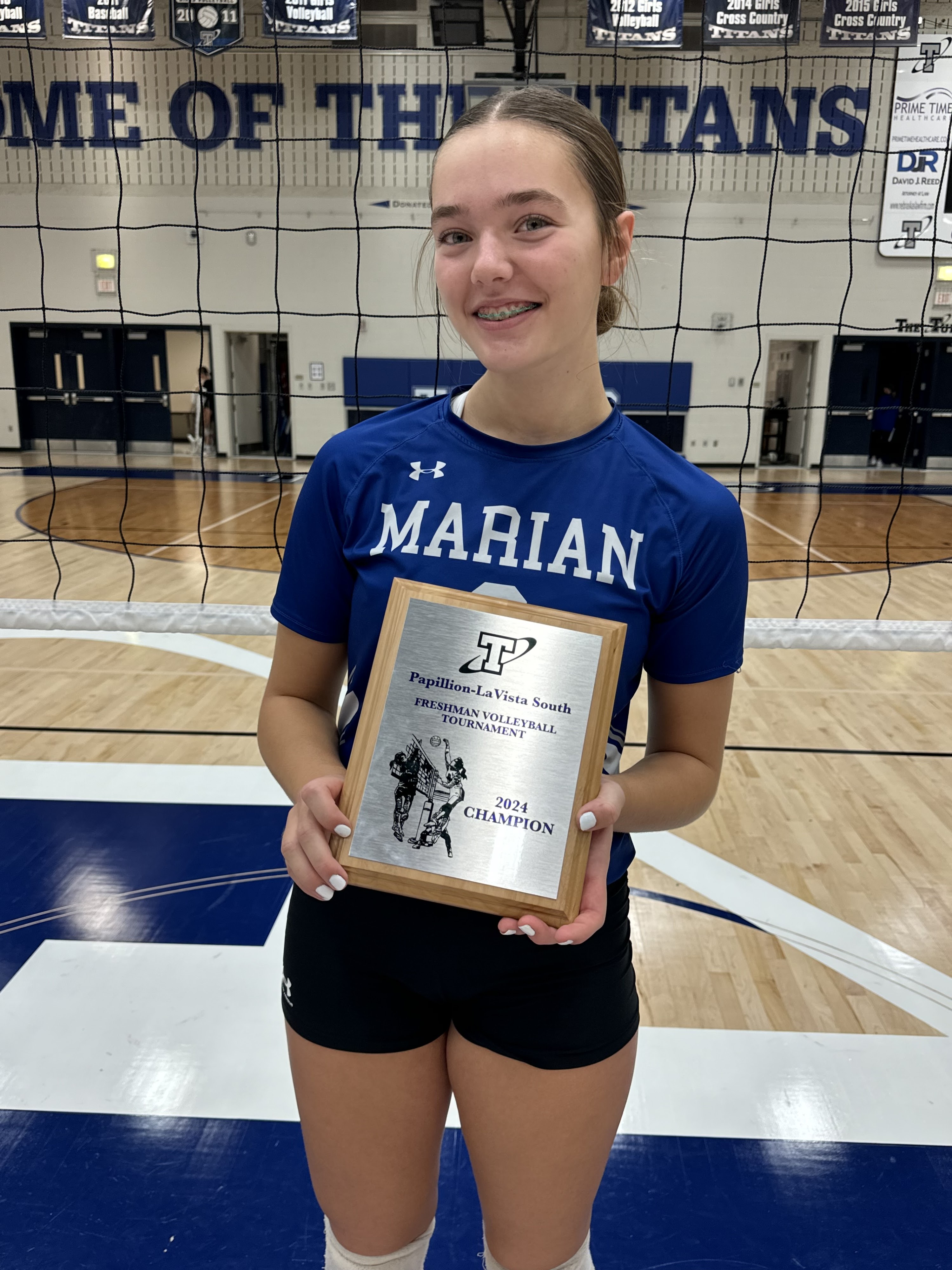
Josie D’Agosto ’28 holds her championship plaque for winning the Papillion-La Vista South tournament. Photo courtesy of D’Agosto.
This shift has helped her grow not only as a player but also as a leader on her team.
“Students are learning to advocate for themselves by communicating directly with teachers and coaches. This can be a big adjustment for freshmen, but I’ve seen growth in athletes every year when they learn to ask questions and talk with coaches about how to reach their goals,” Pettit said.
Across the board, freshman athletes also struggle with balancing the heavier workload with the significant time commitment. “It’s hard to find the time for homework when you have practice or a game every night and a tournament most weekends, and all you want to do when you get home is sleep,” D’Agosto said.
Even with the challenges, the rewards of being a freshman athlete make the experience worthwhile.
“There are so many rewards that come from being on the freshman team, but the most rewarding thing has to be working so hard in practices and holding your teammates accountable and then being able to see it all put together on game day,” D’Agosto said.
Coaches play a big role in the development of freshmen athletes.
“I work on building skills in practice so the girls are confident in their play during matches. I encourage open communication and trust so they feel comfortable asking questions and clarifying what’s expected,” Pettit said.
The support from her teammates and coaches has made a significant impact on D’Agosto. “My coaches have encouraged me to be the best I can be; they’ve been giving me helpful advice, and they’ve given me many opportunities to show my talents. My teammates have held me accountable and pushed me to be the best volleyball player I can be, and they’ve also helped me stay good mentally by always being positive and there for me when I need it.”
For all freshman athletes like D’Agosto, the transition from middle school to high school sports is not without its challenges.
But through hard work, discipline and the support of her team, it is proven to be a valuable experience.






Leave a Reply