
Dominika Kouassi

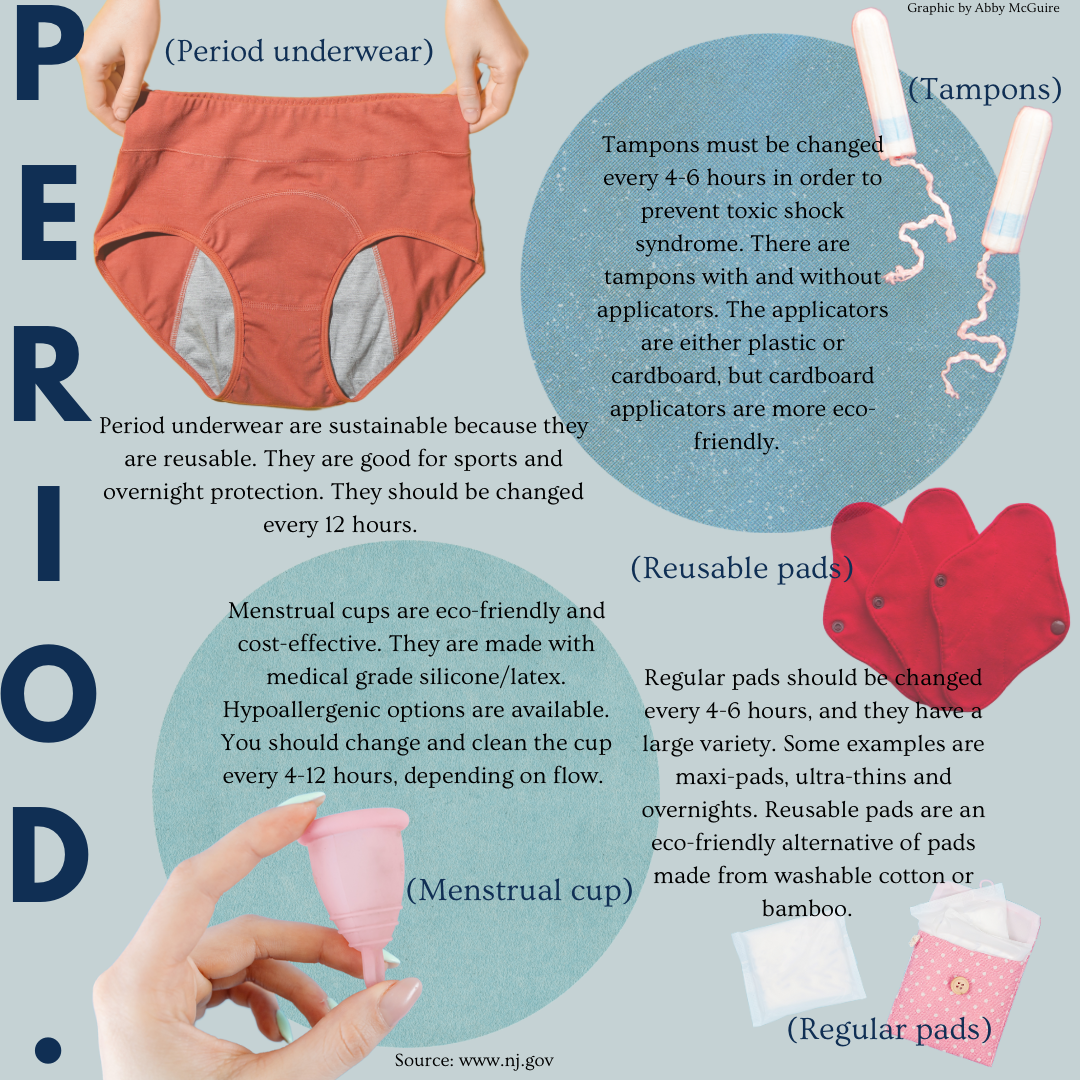
As access to reproductive health care keeps changing, a rapid rise of attention for menstrual health has started a fight for period equity and awareness. Period equity is equal access to period products, and the right to education about reproductive health.
Since 1978, Toxic Shock Syndrome (TSS) was the primary health risk associated with tampon use that gained public attention. TSS is caused by a bacterial infection from the lack of proper tampon changing. Therefore, simply using tampons does not automatically cause TSS.
With the lack of proper menstrual education, young girls grow up fearing a disease they are not likely to get. This fear expands past TSS when it’s met with unresolved curiosity about their bodies, especially during puberty.
“When you’re a little kid, you’re not really educated, and it’s very stressful to not know what is going on in your body, like ‘why do I have menstrual cramps, breast pain or go from laughing one minute to crying the next?” CHI Health Immanuel Nurse Practitioner Tiffanie Smith said.
Some households may find menstrual health taboo because of cultural beliefs. “Parents might not talk about menstrual changes at all so you’re finding out from friends who are as clueless as you are,” Smith said.
So, while TSS awareness is important, individuals who use menstrual products should be aware of what’s going on in their bodies. This includes being mindful of the ingredients in pads and tampons.
According to CNN Health’s Deidre McPhillips, PFAS, also known as ‘forever chemicals,’ are sometimes found in tampons because of their odor prevention or fragrance substances.
These chemicals are called forever chemicals because they do not break down in the environment or in the human body. They can be disruptive to the body because they contain chemicals that throw off the endocrine system—the same system that regulates metabolism, blood sugar, mood, sleep and more.
People who use menstrual products should be aware of these concerns, because vaginal tissue is highly sensitive and absorbent. So if it were found that the toxic and heavy metals, lead and arsenic, can be absorbed into the human body, it could possibly lead to a public health crisis.
While these chemicals are naturally occurring, the places that have higher levels of lead are not.
Chemistry teacher Mrs. Stacy Tunink says that because of the industrial revolution, chemicals like lead left an environmental impact. “It’s coming through the plants; it’s coming through the cotton. It’s not that manufacturers are putting lead in their tampons, it’s that they’re making the tampons out of cotton that could have been affected by the chemicals from years ago,” Tunink said.
There is no need for panic right now, as current research shows that lead and arsenic are not being absorbed into the body through period products. “Arsenic is not dangerously toxic at these levels, and in small quantities, women used to use it to look pretty,” Tunink said.
However, there is something to be said about the lack of research towards women’s menstrual health.
According to McPhillips of CNN Health, “About 45% of women experienced at least one barrier to reproductive health care services in 2021, up 10% from 2017. Nearly 19% reported at least three barriers in 2021, up from 16% in 2017.”
One common barrier blocking these women from getting necessary healthcare was the lack of physicians they felt comfortable with. Other reasons included the outbreak of COVID that brought fear of catching the virus and the childcare crisis.
Despite this affecting everyone who menstruates, this also disproportionately affects people of color. According to an Aunt Flow article written by Pritika Kaityar, this affects women of color because it goes beyond individual issues. Her article explains the impact of fewer neighborhood health services, less insurance coverage, less access to education on menstrual health and racial and stereotypical bias in medical practitioners.
With societal impacts like socioeconomic disparities and cultural differences that go in hand with menstrual health conditions like Polycystic ovary syndrome (PCOS) and endometriosis, proper research and advocacy is imperative. This proves to be even more necessary, as only two out of 10 women properly get diagnosed and Black women are 50% less likely to get diagnosed.
Smith mentions how scary it was for her older sister to develop a menstrual hormone condition and not be properly treated for it due to the lack of awareness. “You can even have puberty rage [on your period] but no one ever talks about it. Maybe going to a clinic and being put on hormone regulation pills instead of being given anti-depressants would have made things better,” Smith said.
Staying informed about menstrual health is essential. By being educated and asking for safer products and extensive research, menstrual health will be forced to be a public health priority.




Leave a Reply