
RowanHamm
Although mental health has become a less taboo subject in general society, teen girls face a special set of circumstances when dealing with mental health.
According to a 2024 UCLA Health study, depression rates among adolescent girls is currently at the highest rate in more than a decade with more than half of teen girls reporting feelings of persistent hopelessness and sadness, and one out of three experiencing depression-like symptoms.
When put into context this data is very telling. Teenagers today are plagued with issues like school shootings, climate change, political polarization and social media pressure that has not been experienced by previous generations in such extremes.
Social media pressures have been a major contributor to poor mental health in all age categories but most notably, teen girls.
The unrealistic beauty standards and constant comparison online can lead young girls to feel a sense of inadequacy which may lead to harmful behaviors like disordered eating.
Since the pandemic, there has been a noticeable increase in eating disorders among teenage girls that stems from the media they are exposed to online.
Researchers for the Frontiers in Psychiatry Foundation claim that “one possible explanation for this potential rise in eating disorders among adolescents could be the influence of celebrity influencers on the body image perception of this age group.” Some of these influencers purposely promote certain supplements, surgeries, diets or workout programs to profit off the insecurities of women, primarily teen girls. Marian’s Mental Health therapist, Mrs. Emily Jamber, says that “some influencers also use Photoshop or specific camera/body placement to create the illusion of a ‘better’ body in order to sell more of the product they are promoting.”
Many times, pro-eating disorder content like “thinspiration” or “fitspiration” shows up on the feeds of young women without them actively searching for it and can be very subtle. The content shown to these young women contains messaging about the value of their being based on the physical appearance of their body in subtle ways such as “body checking”, defined by Jamber as “the act of examining, measuring or monitoring something related to your body, usually your weight, size or shape”, or through more direct methods like body shaming. Even in the “Body Positivity” countermovement, it is rooted in the same objectification and fixation on body image but it just displays different body types. “Instead of putting the focus on bodies, we should put the focus on personal traits, values, abilities and personality. We can empower each other with positive words and phrases about who we are, not what we look like,” says Jamber.
This body-fixated content can lead young girls down a subconscious journey concerning their body image or weight that leads to engaging in unhealthy eating or fitness practices. The consistent acting upon disordered eating or practices such as restricting the amount of food consumed, purging food from the body after consumption, binge eating or excessive working out have the potential to turn into harmful eating disorders.
Eating disorders can come in many forms. Eating disorders of any kind are incredibly damaging not only to the body but also the mind as well. Eating disorders are not a choice made by the person but rather an unhealthy response to internal emotional suffering.
Just like getting help for any problem, taking steps towards addressing eating disorders is a difficult task for many people. The first step in getting help is asking for support from a trusted adult. Cleveland Clinic then suggests acritical next step is reaching out to “a mental health professional [who] can determine the best type of therapy for your situation.” From there, there isn’t a best plan for treating an eating disorder. “The best approach is often a combination of treatment options. Your care team will work together to create a comprehensive treatment plan to address the physical, mental and behavioral aspects of the condition,” says Cleveland Clinic.
Addressing the mental health challenges that teen girls experience, especially related to body image, requires compassion and care. Supporting those who are actively struggling with their mental health to promote a community of resilient and confident young women is more important now than ever in the face of social media driven-expectations.

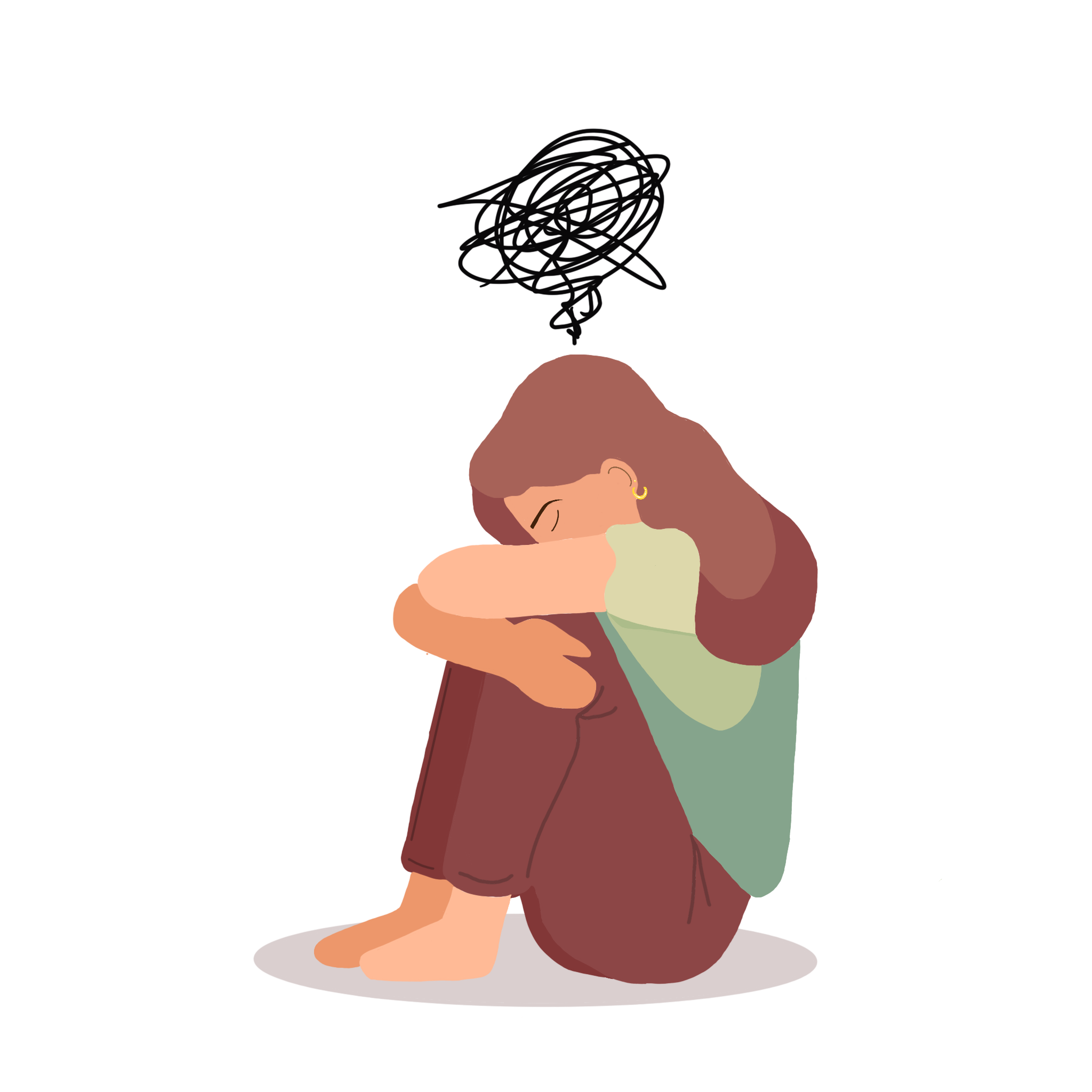
Graphic by AbbyMcGuire.




Leave a Reply