

AbbyMcGuire
The fall of 2024 was a pivotal time for elections, including presidential, state and local races, marking a season of change. Whether it be by creating social media accounts to spread awareness about issues or walking in protests, students have always been involved with political change throughout American history.
However, most high school students can’t vote, so they are often excluded from the political conversation and overlooked by candidates. Yet, youth involvement is crucial—they are the future.
Social Studies teacher Jillian Roger explains the benefits of political involvement for students “I think the biggest benefit that you get from involving yourself…especially being a youth, getting involved early, you learn the ins and outs of that process and where to go if you want political information…it builds that civic engagement and also helps you seek out those resources when you’re an adult.”
As a government teacher, she sees the unique value of education through involvement: “I think it makes the subject of government politics more applicable, because you get to see it in action. I think it’s really easy to read your textbook and take lecture notes and study what you have to study for a test at the moment, but when you’re actually out there and you are meeting candidates…you’re going to learn more about the process.”
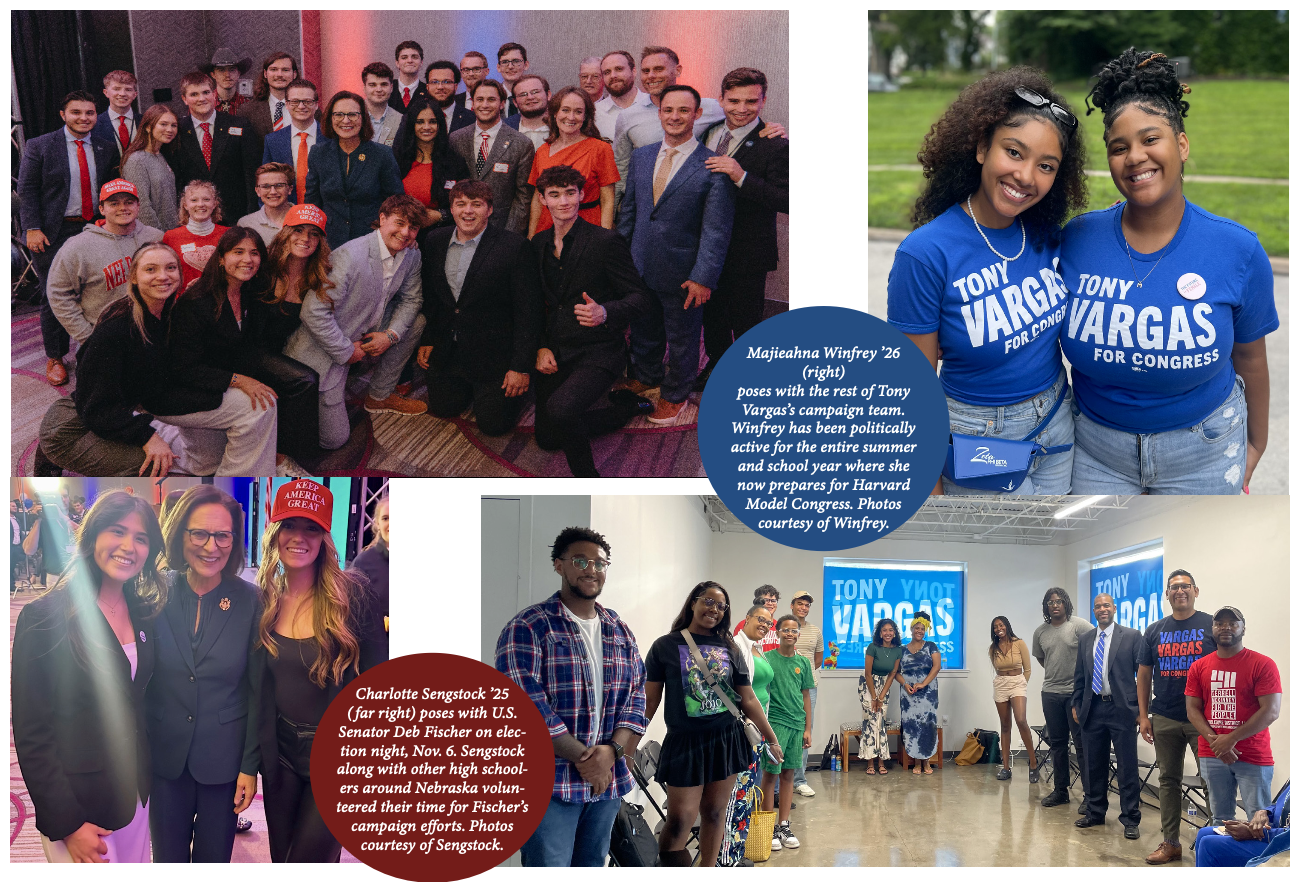
One way students can educate themselves about politics is by volunteering for political campaigns. Two students, senior Charlotte Sengstock and junior Majieahna Winfrey, were involved in two local political campaigns during the 2024 recent election.
Sengstock volunteered for Deb Fischer’s campaign. Fischer has held a Nebraska U.S. Senate seat since 2013, and is the third woman to be a Nebraska senator. Sengstock had the opportunity to get involved with Fischer’s campaign through her friends who had previously worked with the campaign.
She helped “them advertise by knocking on doors and asking people questions. We took calls in the office and we went to sign wavings so you would see us on busy intersections…we also got involved with the Don Bacon campaign as well.”
This experience showed her what working on a political campaign would look like, while also educating herself about the political stances of certain candidates. While Sengstock encourages other students to get involved, she advocates for mutual respect: “one of our freedoms is freedom of speech. So, you have your opinions and you can have your likes and dislikes on certain things. I think you just have to be respectful of everyone else’s views.”
Winfrey volunteered for the Tony Vargas campaign. Tony Vargas is a Nebraska state senator who represents the 7th district. Vargas ran for a seat in the U.S. House of Representatives representing Nebraska’s 2nd Congressional District. Her mom volunteered on the campaign as well, and so Winfrey wanted to work alongside her.
Once she got involved in the campaign, several doors opened for her and she was able to do more than just be a volunteer. “At first, I started off as a fellow…which was mostly canvassing and crowd work. But after that, I got put onto the deputy Black engagement director position. The director of Black civic engagement was my friend Myriah Johnson…I was almost like her assistant,” Winfrey said.
Working as the deputy Black engagement director gave Winfrey the opportunity to advocate for the Black community in political conversations. As a Black woman, Winfrey supports higher political engagement from people of color: “A lot of the issues primarily affect specifically Black women and girls…I feel as if it’s very important for Black and Brown people to be involved in politics because you just become more educated and well-rounded as an individual.”
Her advocacy for the Black community paid off when Vargas was able to closely interact with North Omaha and the Black and Brown communities this campaign, since they weren’t as focused on during his last campaign. Participating in the campaign gave Winfrey the opportunity to speak at the Walz campaign rally in Omaha.
Winfrey encourages Marian girls to get involved with politics, as long as they don’t let political affiliations hurt their friendships. “Having friends of all political backgrounds and racial backgrounds is important to not being so one-dimensional and learning how to interact with different kinds of people. I have friends who may have different values and political beliefs than I do, but we can still be considered friends because the things that we experience are similar on some level,” she said.
Politics are important, but Winfrey doesn’t think it should affect friendships. In fact, it should make them deeper.


Leave a Reply to Lilly ItaliaCancel reply