
NatalieElse
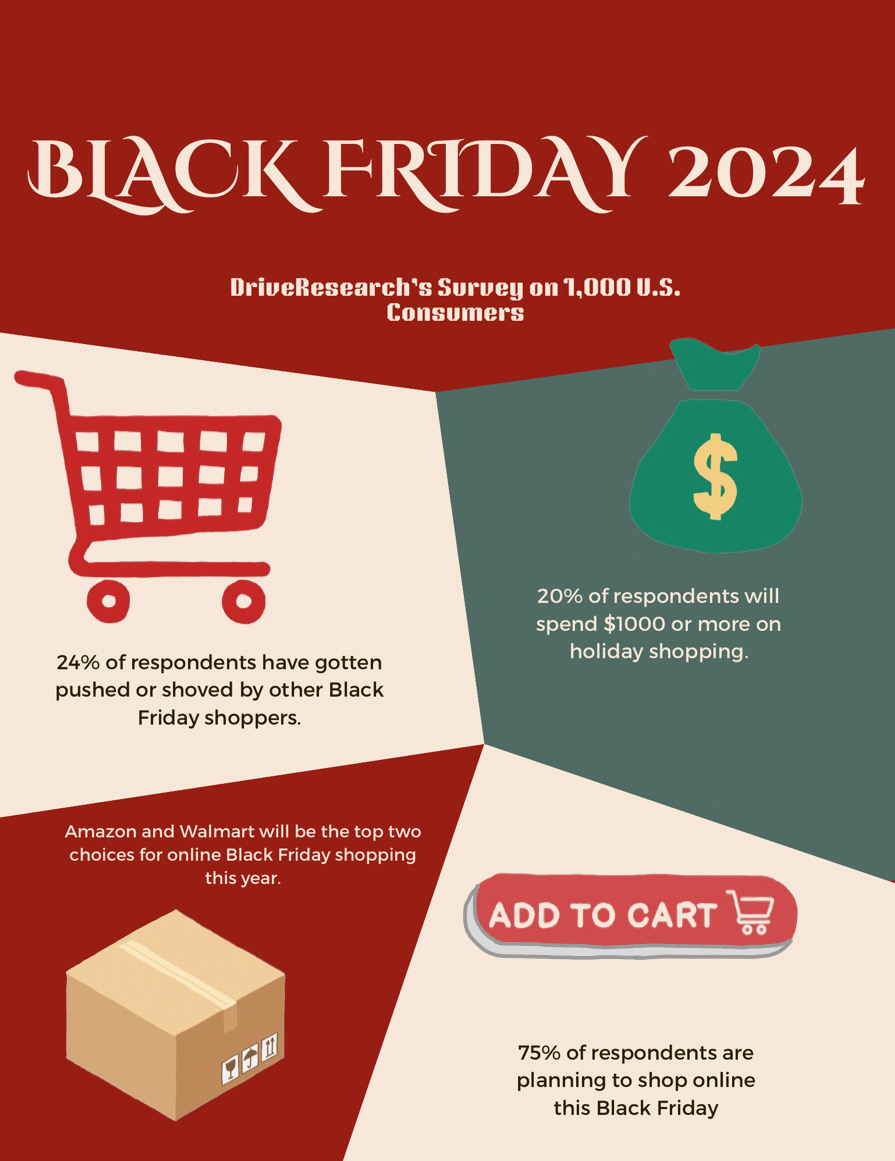
Fist fights over flat screens and door-busting brawls over big discounts. Black Friday has taken on an infamous role over the years, as it is typically associated with mayhem and chaos. But, how did this come to be? And has the decrease of in-person shopping helped change its overall role for the better?
Black Friday is always held the day after Thanksgiving, making it Nov. 29 this year. It traditionally signifies the start of the holiday season as frenzied shopaholics run around stores, trying to get a head start on buying gifts for Christmas.
Black Friday got its official debut in the 1940s and 50s, but some say it began in the 1980s with the sudden rise of Cabbage Patch Dolls and new electronics.
Crowds of people started to camp outside stores days in advance in hopes of being the first shoppers to find all of the good deals. Stores began accommodating buyers’ needs by opening their doors on Thanksgiving night. This heightened the stress for many holiday shoppers who then felt pressured to anxiously camp outside their favorite stores.
What was once a day to find good deals for the holiday season was now a survival-of-the-fittest battle, and ironically, there were large prices to pay for these cut costs.
In 2005, Black Friday took a deadly turn when Walmart employee, Jdimytai Damour was killed amidst the Black Friday mayhem only a week after he got the job, according to LiveNowFox.com. 2,000 people gathered outside the store and when the doors opened at 5am, shoppers eagerly burst the doors down.
Over the years, people have claimed Black Friday has lost its appeal. A little while after the iPhone was invented in 2007, many stores were left with empty shelves on Black Friday. People quickly discovered they no longer had to tediously wait in lines or be shoved by noisy crowds; they could click a few buttons from the comfort of their couch and soon enough, a box would be sitting on their doorstep.
When the COVID-19 pandemic shook the world in 2020, Black Friday featured fewer doorbusters because stores had to limit crowding, according to the Wall Street Journal. The National Retail Federation adds that the number of people shopping in stores fell 37% in 2020.
Junior Rosa Flores goes Black Friday shopping every year. She says that “online shopping takes the fun out of [Black Friday] a little…nobody likes shopping in-person anymore.”
Senior Cailin Mullin, on the other hand, says that online shopping has changed Black Friday for the better. She shares that “[online shopping] has allowed people to get deals before Black Friday hits which allows people to still save money on those things they want without having to physically go to stores.” Mullin has been a regular shopper during the Black Friday season, typically finding good deals in the morning or afternoon.
Despite businesses’ good intentions regarding high discounts and cut costs, Black Friday has caused waves of mass mania across the U.S. throughout the years. But, no matter how one goes about shopping on Black Friday, there is no doubt the day is here to stay.



Leave a Reply