
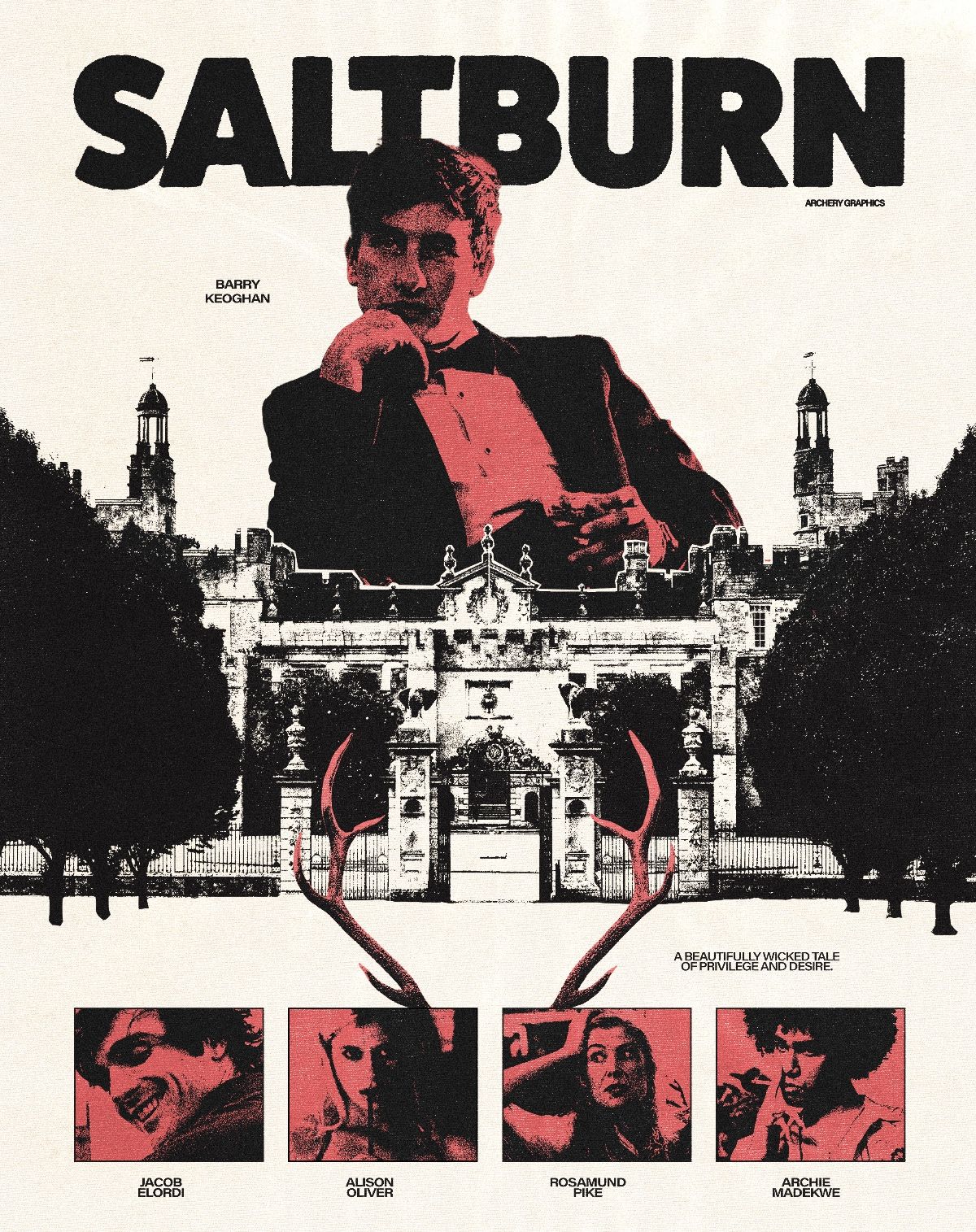
Review by J1 Reporter Delaney Shea
Late last year, in unsuspecting movie theaters, “Saltburn” branded its name into society and remains a controversial film; either loved or hated, but rarely both.
I watched “Saltburn” this Thanksgiving and have found the collective hate for this movie ostentatious. Rather than stemming from bad production, this hate grew from a lack of media literacy and deeper understanding of film. This psychological thriller released on Nov. 22, 2023 took the world by storm shortly after release for its disturbing imagery and ability to unsettle viewers. It also garnered an immense amount of hate for the exact same reasons.

All 2 hours and 11 minutes of this movie follow college freshman, Oliver Quick, and his rapidly growing friendship with popular student, Felix Catton. This period piece, set in 2006, powerfully enraptures the feeling of the time and its seemingly carefree energy. The cinematography of the film, conversely, captures Oliver’s slow descent into madness with the dark settings, simultaneous views, and sharp contrast between his persona and his actions.
Even after being nominated for many awards, like 2024 Critics Choice Award and BAFTA, there was a stark divide between viewers, some saying it was disturbing and unnecessary while others praised its genius and execution. I would have to agree with the latter.
“Saltburn” takes heavy inspiration from many literary works, such as “A Midsummer Night’s Dream” written by Shakespeare. “A Midsummer Night’s Dream” is visually evident, as it is the theme of Oliver’s birthday party at the Catton’s mansion—namely called Saltburn. Allusions to this work do not stop at the visuals, utilizing its plot to foreshadow events and create a feeling of suspense and dread while keeping the facade of normality.
With a rating on Rotten Tomatoes of only 71%, many audience members completely missed the meaning of “Saltburn” and why it contained unsettling scenes such as the ever popular “bathtub scene.” So, clamored with switches between dark and vibrant, it covers the fact “Saltburn” was made in order to divert the audience from its true meaning—if any. This film was created to be satirical. It was created to bring attention to audience obsession with media that does not mean anything.
When Googled, reviews left on “Saltburn” generally state that it was boring and tasteless, though not many wrote why it seems this way. This movie opens with “God Save the King,” an iconic British song, along with chronologically ambiguous dressed college students, such as Felix’s cousin, Farleigh. Sporting plaid pants and a drab sweater straight from the 70s, his odd fashion for the year along with the medieval sounding music creates a sense of sarcasm towards the advertised seriousness of this movie.
As the movie continues, the plot simultaneously falls apart and sews itself together, depending on how deep you look. Oliver’s madness and plan coming together is the most obvious way to look. Contrarily, as many disgruntled viewers stated, the change from fun to odd made the film feel pieced together. I could understand how this could seem sloppy if the viewer does not know the underlying intent of “Saltburn.”
The abrupt ending did not help with the misunderstandings. It is ironic that this movie is accomplishing both its purposes. It is garnering praise from critics for calling attention to the lack of media literacy and importance while also proving that media literacy is dead through the hate based on lack of depth into the plot.
Available to buy on Apple TV, YouTube, and Google Play for $14.99, “Saltburn” is a great movie to watch to get a different perspective on popular media. Though, you may not want to watch this movie with your mother, like I did.




Leave a Reply