
By J1 Reporter Sydney Schulze

“Every court since the beginning of the Supreme Court has fallen prey to politics in one fashion or another,” social studies teacher Mrs. Jillian Roger said.
The Supreme Court of 2025 is an activist court. Its current members have been making significant changes rather than solely upholding the Constitution and former court rulings. Regarding the state of the judicial system, Roger said, “It is very important to have an independent judiciary… I think it is everyone’s goal but I think that maybe it is unattainable.”
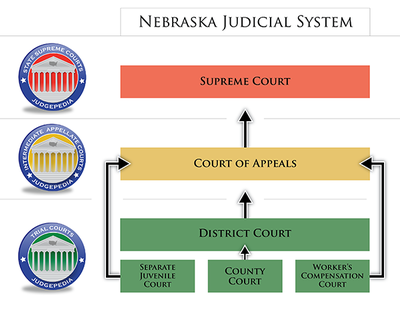
Judge Brian C. Buescher, who serves on the United State District Court for the District of Nebraska, shared insight into his role in the courtroom. “My philosophy happens to be that judges should follow whatever law Congress passes and not insert their own personal judgments into their rulings,” Buescher said. While this can be challenging, it is also extremely important.
Four of the nine Supreme Court justices currently ruling on cases are over the age of 65 years old. Federal judges can retire at that age while maintaining their salaries. Elizabeth Buescher, a senior at Marian who recently completed U.S. Government class and has a District Court Judge for a father, commented on this reality. “They’re just waiting for a better time to retire so that it’s more politically advantageous for their party,” she said.
One proposed solution to potential political influence is instituting an age limit for justices. Age limits in government positions have long been a topic of discussion. Judge Buescher said, “People who are in court… should be able to expect they have a judge who is, you know, still able to confidently and adequately rule on their case.”
A recent Supreme Court ruling highlights the age gap between those making decisions and those affected by them. In the 2023 Students for Fair Admissions v. Harvard case, the court ruled that colleges cannot consider race as a factor in admissions. This decision also discourages applicants from submitting any materials that indicate their race. Roger said, “The systems they had in place to try to diversify their student populations aren’t there anymore.”
How can students contribute to change? For those interested in the political world, Judge Buescher recommends taking Marian’s Business Law class. From there, students would need an undergraduate degree before heading to law school. “Once you make the decision to go to law school, then after that to be a judge, you really should focus on litigation, which is dispute-oriented law,” he said.
It is important to understand that every voice deserves to be heard. The government impacts everyone, and new, young voices are essential to maintaining democracy. As Roger said, “[Judges] are here to serve the Constitution of the law.” There are many ways to participate in government and help create the changes you want to see.



Leave a Reply