
By J1 Reporter Sarah Egan

For students at Marian, lunch might be just another part of their day, but the food they eat goes through a long journey before ending up on the plate in front of them. While it’s easy to overlook the origins of their food, understanding where food comes from and how it is produced is becoming increasingly important for both students and the broader community.
This idea reminds me of what I learned last semester at The Mountain School, a semester program located on a hilltop farm in Vermont. I saw firsthand what ethical and sustainable food sourcing looks like on a small-scale farm—one that prioritizes the land, the workers, and the consumers. I also learned how rare that is.
I was overwhelmed when I discovered how exploitative large farms dominate the US food system by misleading consumers, abusing labor and the use of greenhouse gases. These companies, often referred to as “Big Food” seem to prioritize efficiency and profit over health and sustainability, which can be detrimental to the well-being of people and the environment.
Louisa Pflaum, a junior at Menlo-Atherton High School in Palo Alto, California, and my peer from last semester, shared how her eating habits have changed after learning about the malices of the US food system. “I now look to support smaller farmers when I can, because they provide the transparency and agency that big corporations and brands only give people the illusion of,” Pflaum said. However, sourcing from smaller local farms is not always practical. “This awareness puts consumers in a really hard position,” Pflaum said.
Since gaining this new knowledge, I pay closer attention to the food that I eat and the journey it takes to end up in my refrigerator. Since being back home in Omaha, I’ve realized how difficult it is to avoid supporting harmful corporations. I have struggled to make ethical food choices when eating out, finding alternatives in a rush, or just eating the foods my family buys. As much as I try to eat fewer processed foods and make sustainable choices, it is a challenge. This challenge persists for many larger groups.
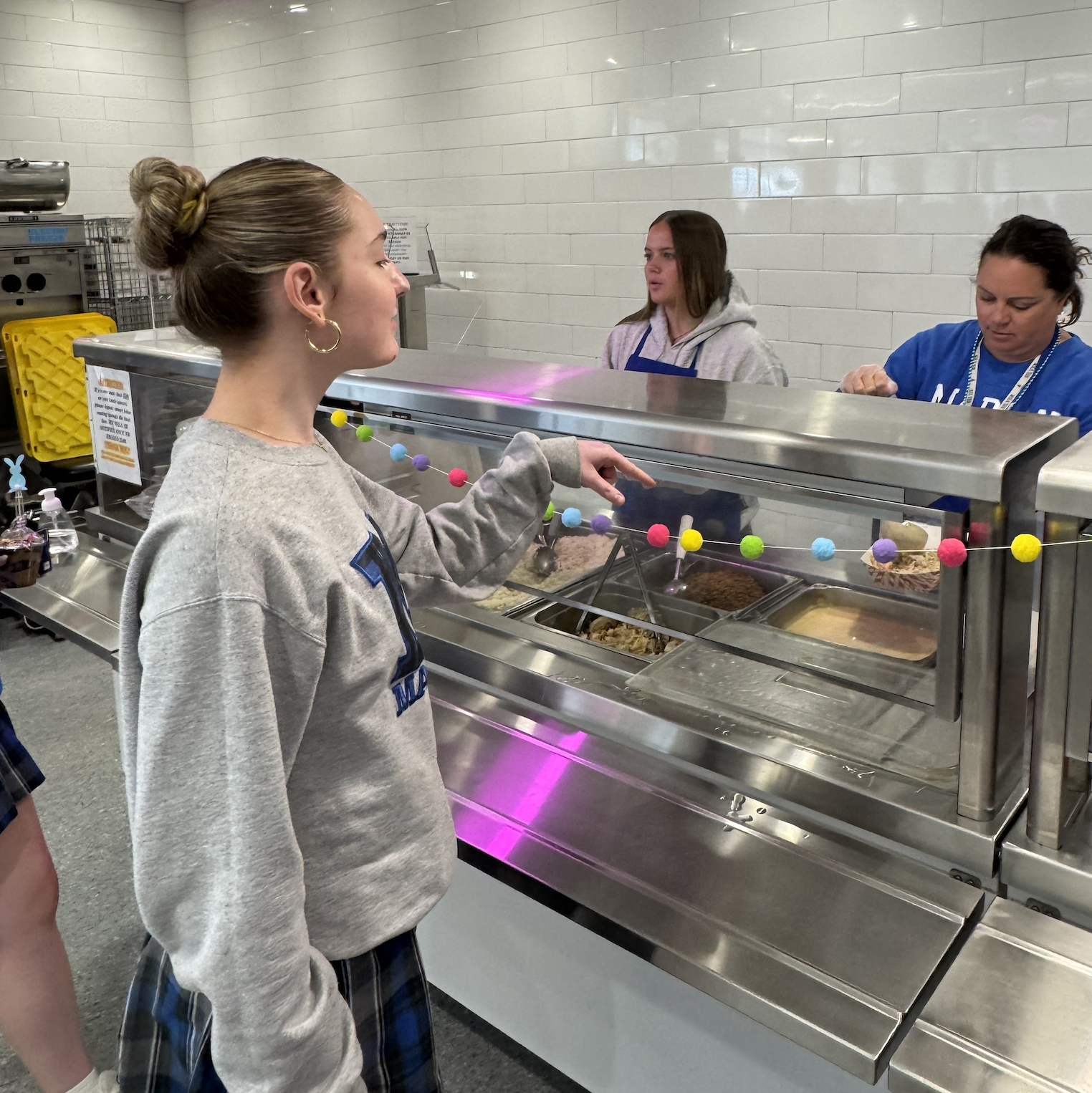
“This can be especially difficult for larger institutions, such as Marian.” Bob Hurtado, the head of Marian’s cafeteria, expressed his opinion on food sourcing.
“We are dealing with at least 300 girls every day so it’s harder to source a smaller farm because it just couldn’t handle it,” Hurtado said. Although it is difficult to source from smaller farms for such a large group, Marian’s lunch crew does their best to source meat locally, supporting regional farms when possible.
Once teens learn about these flaws, it’s not easy to change key factors such as where their family shops or what type of food they eat. For example, even though I cut meat out of my diet, my family still eats it at meals. This means I have to find alternatives, and when I’m in a rush, it’s hard.
Though this can feel overwhelming, all Marian students need to do is start with awareness. Educating yourself about the flaws of the food system and asking questions about where your food is coming from are small choices that can lead to great impact. Do not immediately look at the big picture—I suggest starting by reading your food’s labels to see where it came from. If it doesn’t have a label, that could be a good thing. This quick read can initiate consideration of the animals, people and materials involved in getting this product to the consumers.
Making other key choices such as choosing local or plant-based options when possible and advocating for more sustainable food options in your cafeteria are beneficial. It is important to recognize that these small steps contribute to a larger movement, and encouraging conversations about food sourcing ultimately builds awareness in your community.




Leave a Reply