
By J1 Reporter Emily Ortmeier
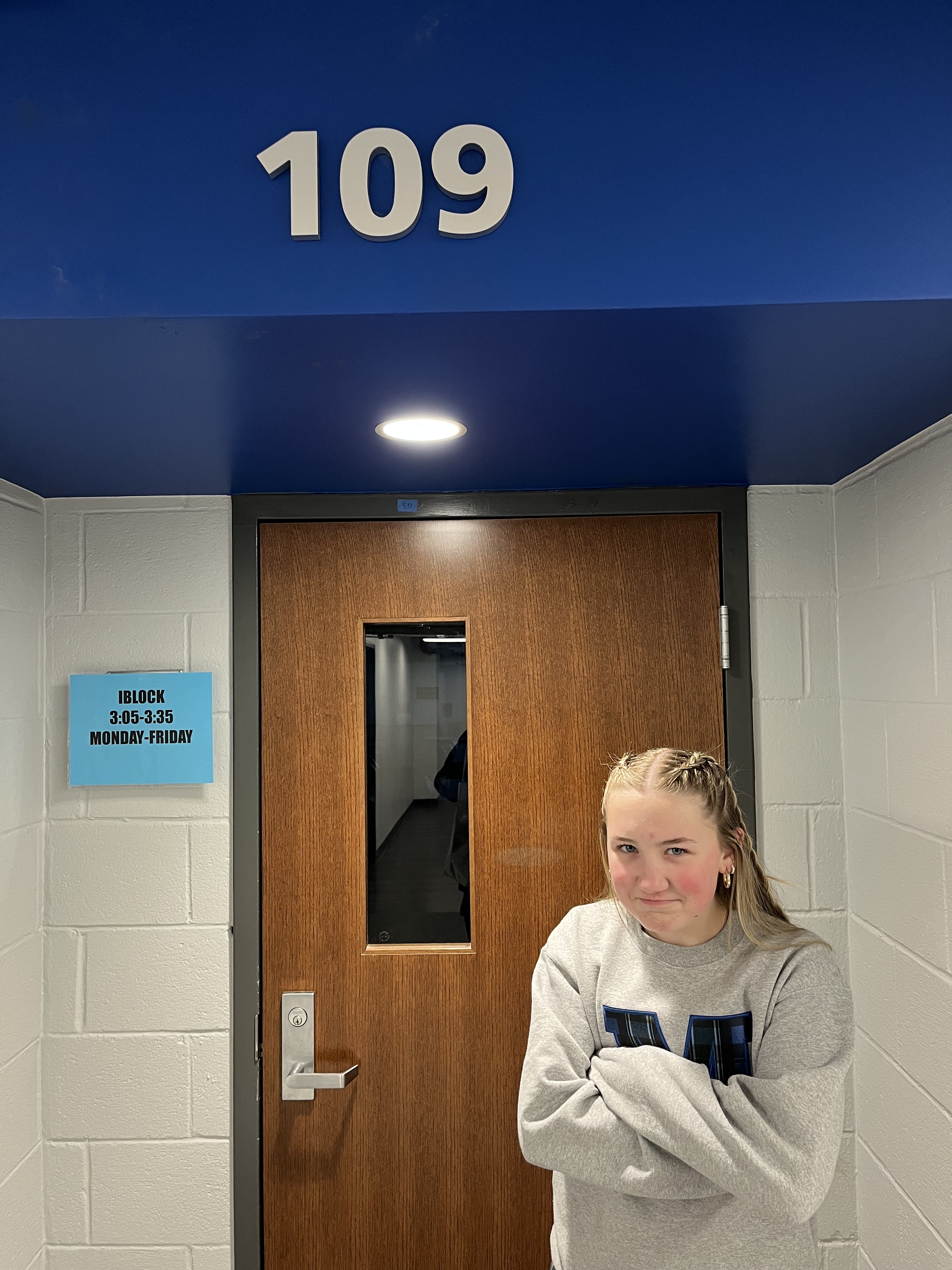
An after-school detention-like study hall, known as iBlock, has become a system that the Marian administration has used since 2017 to build accountability in students to complete their homework. If a student fails to complete an assignment or does not turn an assignment in before it is due, they go to Room 109 and stay for 30 minutes after school where they are monitored by a teacher who makes sure they complete said assignment during that time.
Dean of Students, Mrs. Kris Hennings, who helped implement the program says that during the first semester of the 2024-2025 school year “86% of the kids that went to iBlock only went one or two times.” Hennings said that it serves as a “deterrent, once you go you don’t want to go back.”
Although not always certain that the missing or late work is being completed effectively, Hennings said, “I would hope so, [students] are supposed to email their teacher when they’ve completed the assignment.” So with such a system of checks and balances, where students are not recurring offenders, a system like this can still have its faults.
Sophomore Claire Newton has been to iBlock a total of two times during her high school career. Newton says that her first experience with iBlock was “legit” and that it was well deserved but her second experience left her with some harsh feelings.

Newton says that she was assigned iBlock for an assignment that she “didn’t even know about.” The day Newton went to turn in her math homework she discovered that she had unknowingly completed only the front page of assignment. Though she had only completed the front side of her paper, she completed the back during the rest of her class period but still received an iBlock from her instructor.
Hennings knows that it can be a tricky situation when assigning iBlock in cases where the assignment was completed, just turned in late as opposed to it being missing completely. ”It’s the principle of it.” She said she sees this as a way to institute taking responsibility for missed deadlines and prevent reoffends.
But in Newton’s case, her iBlock sentencing made things extra complicated for Newton in terms of scheduling conflicts. That day, Newton had planned on attending the first day of tryouts for the school’s swim team. “I was really stressed out,” she said, and to her good fortune, she “was able to move it to two days later.”
Times when miscommunication has led to unmanageable schedule conflicts for students, the iBlock system always has a way of preventing stressful situations for students while still being effective. If a student is unable to attend due to inflexible situations, such as their work, each student has one opportunity, a year, to reschedule their iBlock for another day.
As of the 2024-2025 school year, Hennings and the administrative team added a new rule to the iBlock system that “if a student goes to i-block more than four times in a quarter on the fifth time, [that student] is assigned an all time homework lab Monday through Thursday for an hour.” Hennings admitted that she understood that this system will “mess with people’s work jobs [and] sports,” but she said it is just another way to prevent recurrent offenders and show the importance of getting homework completed and submitted on time. “We put up that detergent, and it has been very successful,” Hennings said.



Leave a Reply