
HannahTaylor
To set the scene, it is a “silent night,” where all is “calm and bright”… obviously these are lyrics to the iconic Christmas carol “O, Silent Night.” But do these lyrics still permeate the quiet, peaceful streets of the holiday season anymore? And more importantly, where did they come from?

Christmas carols formally date back to the 14th century, but the history of people performing plays, songs and dances to keep spirits lively during the different seasons goes back even further. St. Francis of Assisi is often credited with being the main proprietor of popularizing “traditional” caroling. Most famous carols originate from English, Catholic roots, with songs such as “O Come All Ye Faithful” and “Away in a Manger” dating back to the 1800s.
In the 1900s, these carols grew in popularity in America as Christmas became commercialized and charity was embedded into the fabric of the holiday season. Often, printed copies of Christmas tunes would be made and left outside of churches for people to use, and many fundraisers took advantage of this festive tradition, singing on street corners in exchange for donations.
However, it is an odd and– while not unknown— fading tradition. The “cold weather [and]… constantly repeating some songs, it can get a bit repetitive,” said senior Clara Kizer, an avid singer in the Omaha community. There are definitely quite a few cons to the caroling tradition.
The idea of standing in the cold singing on street corners as people pass you to a cozy restaurant or home, with little to no benefit besides an attempt to spread the elusive “Christmas cheer,” seems unappealing.
And, it is— many people have never or don’t continue the Christmas caroling tradition. According to Marian’s Network survey, only 38% of girls have ever gone Christmas caroling.
However, Christmas caroling is a holiday activity that still spreads the feeling of community to passersby and is still kept alive by select individuals. “I believe while singing Christmas songs, others will recognize these songs and it may bring joy and could light up someone’s day without you even noticing,” Kizer said. The cheer that caroling brings to those in the community is still definitely real, even if it doesn’t seem like that.
Unlike the excessive amount of turkey for Christmas Eve dinner, the hostility of Black Friday or the frustration that comes with building gingerbread houses, Christmas caroling is an easy and, surprisingly, fulfilling activity. “You’re able to sing Christmas music that you love and enjoy with others,” Kizer said. Plus, sometimes a charitable soul will throw a smile– or coin– in your direction when singing those jovial hymns. Above all, this singing is an excuse to gather friends, family and community.

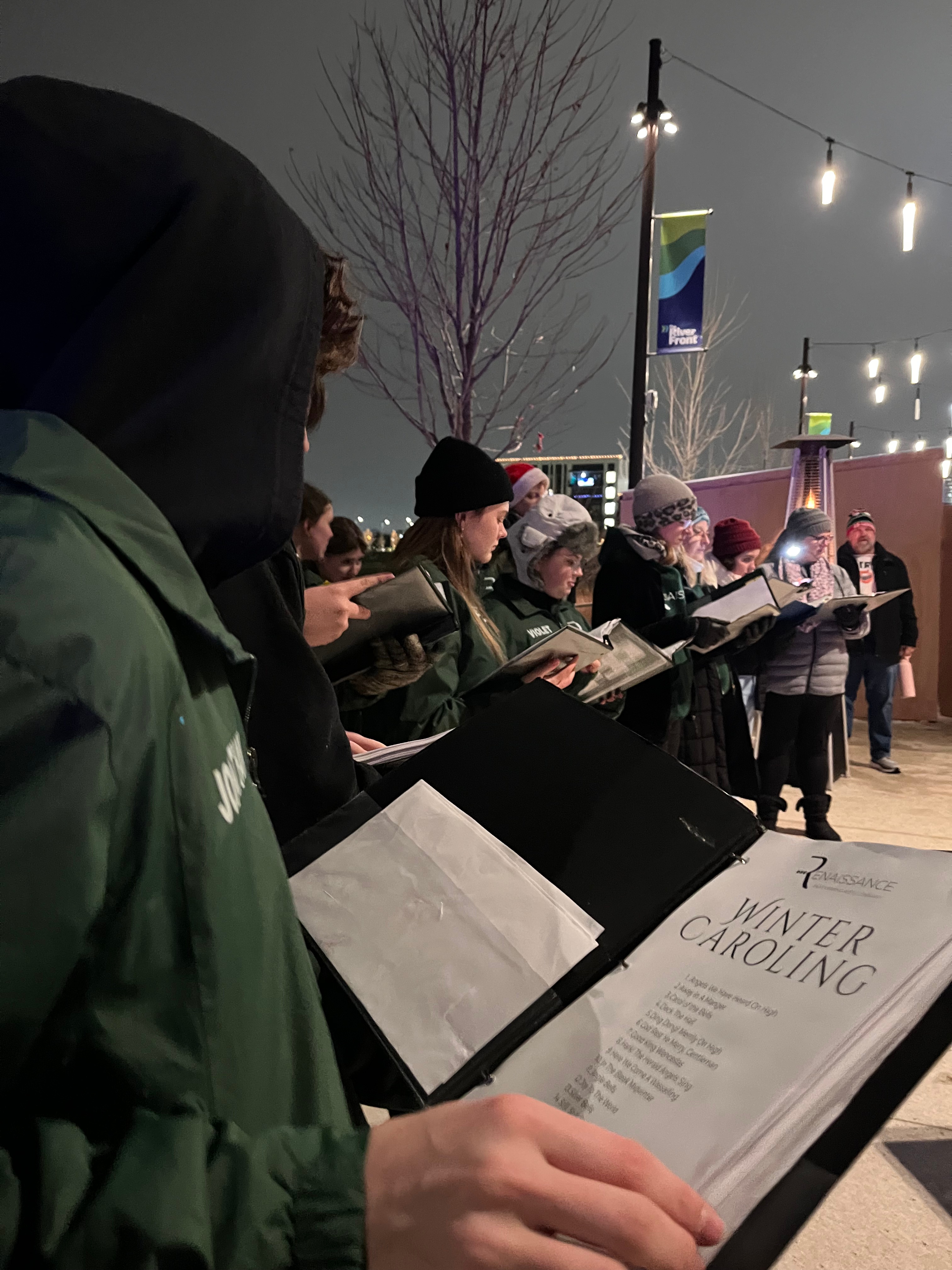
For a fool-proof traditional Christmas caroling experience, you’ll want to first, dress in layers… many, many layers. It will be colder than you expect, especially when standing in place and attempting to flip pages of music with frozen fingers, so always add an extra layer… just in case.
Second, gather friends, family or join a local choir. No one wants to carol alone, and the more voices, the better— especially in noisy or crowded areas. And remember to pick inviting and busy places to carol.
“My favorite memory, while Christmas caroling was when… choir [went] to go and sing during Dundee Lights and I was able to sing with many of my friends,” Kizer said. The lights of Dundee or the brick roads of the Old Market make a perfect place to carol—bonus points if it’s on the weekend.
Third, don’t rehearse. While some may disagree with this sentiment, attempts at harmonizing a cappella with no preparation and nothing but a vague idea of the song you are singing is much more interesting than a perfectly rehearsed song.
And finally, have a reward for your fellow carolers, whether that’s hot cocoa, cookies, a fireplace or a home-cooked meal. In any case, rewarding your troupe with a warm gift to thank them for their help spreading the spirit of Christmas will make the work you’ve all done all the more rewarding.
“When we were all done caroling, we went out to get ice cream all together,” said Kizer about her sweet reward after caroling. So perhaps, you’ll follow the unorthodox method of getting ice cream after caroling.




Leave a Reply