
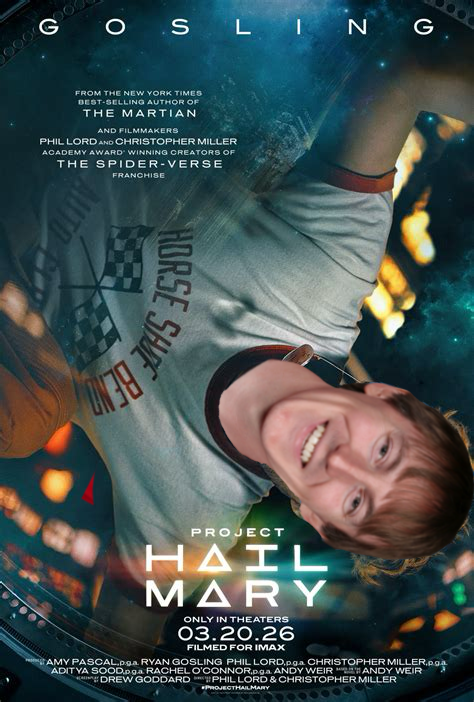
Review by SyraQureshi
In a time when space movies are becoming popular again, “Project Hail Mary” stands out as more than just another sci-fi film. Directed by Phil Lord and Christopher Miller, the movie follows Ryland Grace, played by Ryan Gosling, a teacher who wakes up alone on a spaceship with no memory and slowly realizes he may be the only person who can save Earth.
I watched the film on April 3, and weeks later, I’m still thinking about it. What makes it different isn’t just the space setting or the visuals, but it’s the way it mixes humor and emotion in a way that actually feels relatable to now. Instead of focusing only on action, the story centers on problem solving and empathy, something students experience every day
Grace being an ordinary guy makes his journey feel more personal. He’s someone who figures things out step by step, often making mistakes along the way. As he pieces together his mission to stop a mysterious threat killing the sun, the film builds suspense while also introducing real scientific ideas in a way that’s easy to follow.
One of the most memorable parts of the movie is the unexpected friendship Grace forms with an alien named Rocky. Their relationship adds humor, but it also highlights themes of communication and teamwork. Even though they are completely different species, they learn to understand each other, which ends up being one of the most emotional parts of the film. It’s the kind of storyline that stays with you long after the movie ends.
Visually, “Project Hail Mary” is just as strong. The space scenes feel detailed and immersive, especially moments like the astrophage shower, where red light fills the screen. It’s a scene that makes the whole theater go completely quiet.
The movie isn’t perfect. At over two and a half hours, it can feel long, especially toward the end. Still, for many viewers, that time allows the story and characters to fully develop.

Mr. Nick Miller by
KatherineDietz

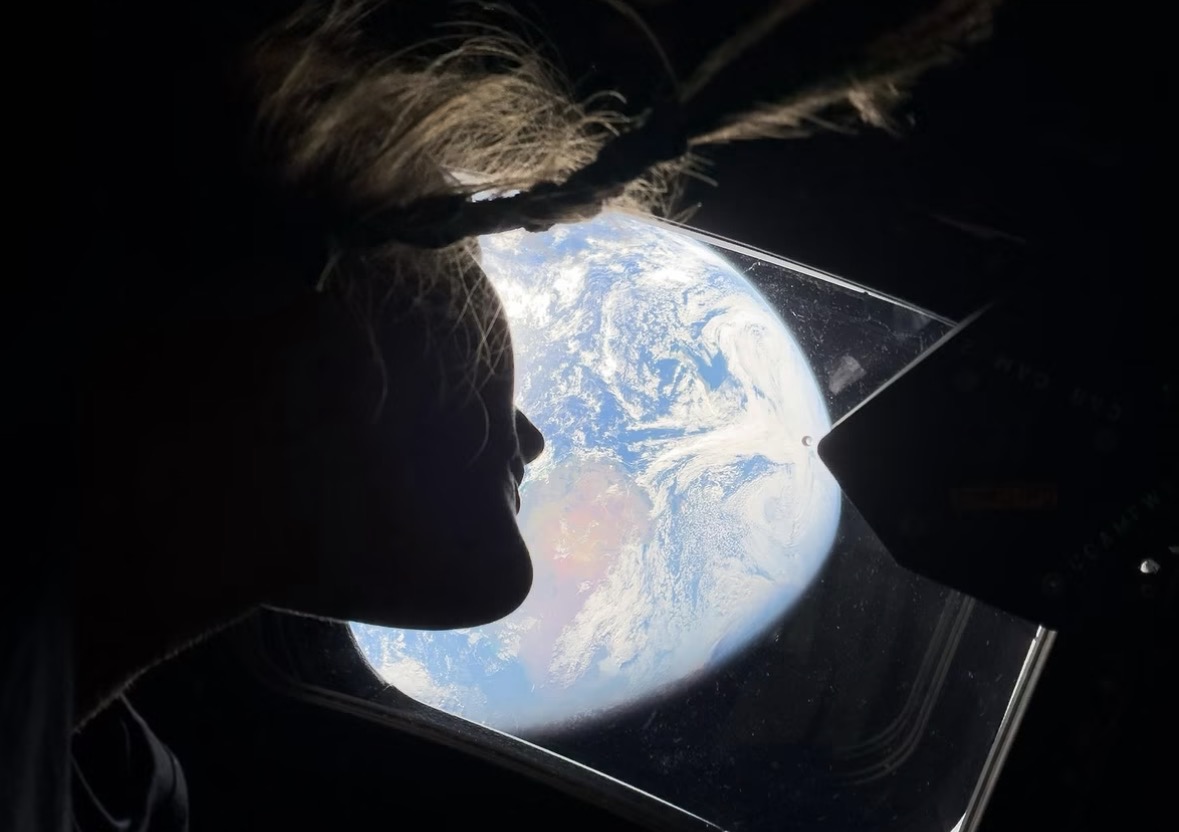
Beyond entertainment, the film feels especially relevant right now. With real-world missions like Artemis II mission bringing space exploration back into public focus, the ideas in “Project Hail Mary” don’t seem as far-fetched as they once might have.
Science teacher Mr. Nick Miller has seen this growing interest firsthand.
“I’ve always liked science,” he said, but he didn’t really start paying attention to space until later. He explained that his interest grew through his wife, and later through trips to national parks like Great Basin, where they used telescopes to view the night sky.
He also remembers watching major space milestones, like the first crewed Dragon rocket launch in the United States.
“That was exciting,” he said. “For a while, we were relying on other countries for launches. Seeing people go up from here again…It felt like something was changing.”
That excitement is starting to show up in students as well. According to Miller, some of his students recently expressed interest in the Artemis II rocket launch.
“You can tell there’s more interest now,” he said.
He believes missions like Artemis II are important not just for exploration, but for testing systems that will shape future space travel.
“They’re checking everything life support, controls, how the spacecraft operates,” he explained. “And at the same time, astronauts are seeing parts of the Moon humans haven’t seen before.” He added that scientists have pointed out how human observation can sometimes catch details that computers miss, showing that people still play a key role in discovery.
When it comes to “Project Hail Mary,” Miller sees both realism and imagination.
“One thing I questioned was how long they were traveling to reach another star,” he said. “We don’t really have that kind of technology yet.” However, he appreciated how the book handled concepts like simulated gravity.
He also emphasized why space exploration still matters, even when there are problems on Earth.
“There’s always that argument, should we focus more on issues like poverty or illness?” he said. “But the research NASA does for space can turn into technology we use here.” Those spinoffs impact medicine and engineering in everyday life.
For students interested in space, he pointed out that opportunities already exist.
“There are citizen science projects anyone can join,” he said. “And internships where students can actually work with researchers. These connections can really lead somewhere.
Ultimately, both the film, book, and real-world exploration send a similar message. “Project Hail Mary” shows how one person, using knowledge and persistence, can make a difference. At the same time, missions like Artemis II remind us that space exploration isn’t just for astronauts, it’s something that can inspire anyone.
As Miller put it, some of the most exciting discoveries are still unknown.
“In science, we don’t always know what we’re looking for,” he said. Sometimes the biggest breakthroughs come from things we didn’t expect at all.
For students today, that uncertainty isn’t a drawback, but the reason space feels full of possibility.

Leave a Reply