
AbbyElse
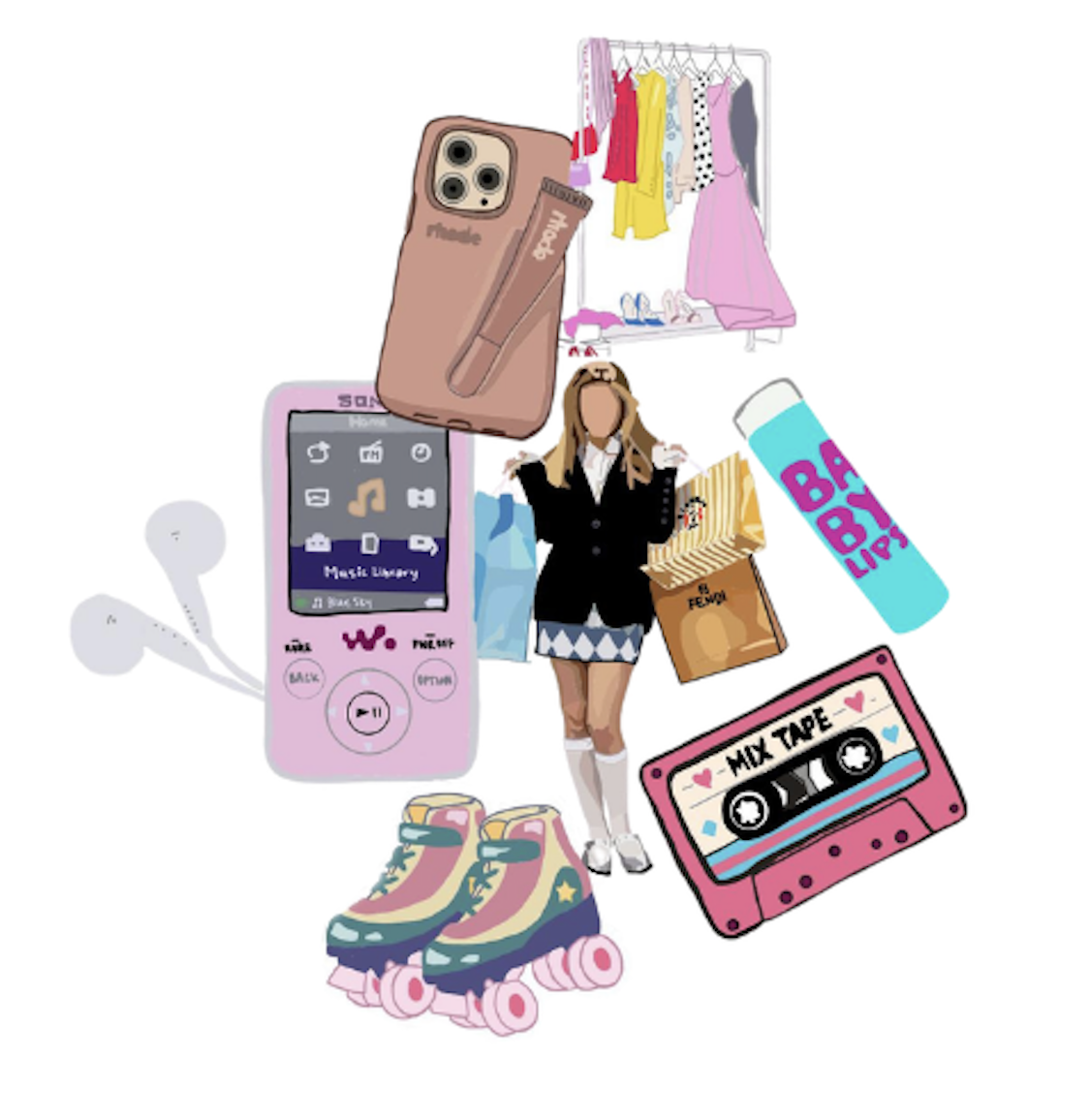
Dig it, gnarly, bling, lit, bell-bottoms, neon, grunge, Y2K and sweat sets are just some of the ongoing list of trends dating back to the 1970s. Throughout history, trends have been seen as a reflection of society through slang, fashion, print, music, hairstyles, makeup and movies.

With the 1970s, fashion had its “groovy” boom with choices like denim, fringe jackets, bell-bottoms and Bohemian styles along with disco-glam makeup and big feathered hair. The 1980s fashion was defined by shoulder-padded blazers, vibrant colors, preppy wear, elegant couture, more denim and big hair. Music was dominated by synth-pop and rock.
Sophomore Molly Patterson said that music from these decades has remained a staple in many lives. “The song ‘Downtown’ by Macklemore is really popular right now but it [the original in 1964] came out a while ago,” she said.
Sophomore Caroline Pirsch said the Nike shoe brand is “still as popular or even more than it was in the 1970s.”
Sophomore Sasha Gross-Rhode said that “some trends that have stayed consistent would be slang and informal greeting.”
As if! This phrase coined by Cher Horowitz in the 1995 classic movie “Clueless” became a slang staple for the decade. New fashion fell into four dominant categories: preppy, grunge, minimalistic and hip-hop. The preppy style included plaid sets and polos. Grunge included ripped jeans, Doc Martens and flannels. Minimalism was simplicity and neutral colors. Hip-hop encapsulated baggy jeans, sneakers and big jackets. The 2000s incorporated low-rise jeans, baby tees, Juicy Couture tracksuits, sweaters, UGG boots and butterfly clips.
Senior Eliana Xydakis says that parts of the hip hop or minimalistic style of these two decades are still seen today with people wearing jeans and a casual top or listening to hip-hop music.
“Some hairstyles like old clips have come back into style and old rom-com movies are still very popular, like ‘How To Lose A Guy In 10 Days,’” Patterson said.
Xydakis said trends can both add and lessen creativity. “In a sense, yes, because everyone is doing the same thing. It doesn’t have originality. But when people get on trends, they have their own uniqueness to it. We also reuse trends a lot from earlier years, so it’s interesting to see how people put a twist on them in ‘modern’ life,” Xydakis said.
The 2010s fashion turned into skinny jeans, flannel, plaid, bold necklaces, slogan tees, sneakers, athletic wear and the soft grunge styles. Apps like Instagram, Snapchat, Tumblr, Pinterest, Musical.ly and TikTok became popular, with the progression of the iPhone. The 2020s have so far been defined by cute sweat sets, cozy wear, athletic wear and loose denim.
“A trend can bring a sense of community to a space but it can also be an outlet to creativity. You can put your own personal spin on a trend,” Gross-Rhode said.
“I think trends lead to originality because without trends we wouldn’t explore new styles, but with them we are exposed to new ideas and are able to find the styles/trends we love best,” junior Molly McGreer said.
McGreer said she believes polka dot patterns and slick backs will be gone soon.
Pirsch said that claw clips will die out.
Patterson said she thinks Parke sweatshirts will fade out.
Gross-Rhode, Patterson and Xydakis all say they believe a trend that is popular now and will make a resurgence in the years to come are the polka-dots seen on clothes.
“Current trends I think will come back in a few years are pearl earrings and mock necks,” McGreer said.
Pirsch said she thinks TikTok dances from 2020-2022 will make a comeback.
“I think a trend does make people lose some creativity because they are just following the majority and what others have instead of being unique,” Patterson said.
“I don’t think creativity is lost by having trends. People should buy whatever they feel good in, and if that happens to be a trending product it shouldn’t matter,” Pirsch said.
Out of the 119 students who responded to the Network’s October Google Survey, 80% said they feel compelled to follow or buy whatever is trending. In a follow-up question, 70% who answered feel that being a trend-follower decreases creativity.
What do you think? Leave a comment!

Leave a Reply