
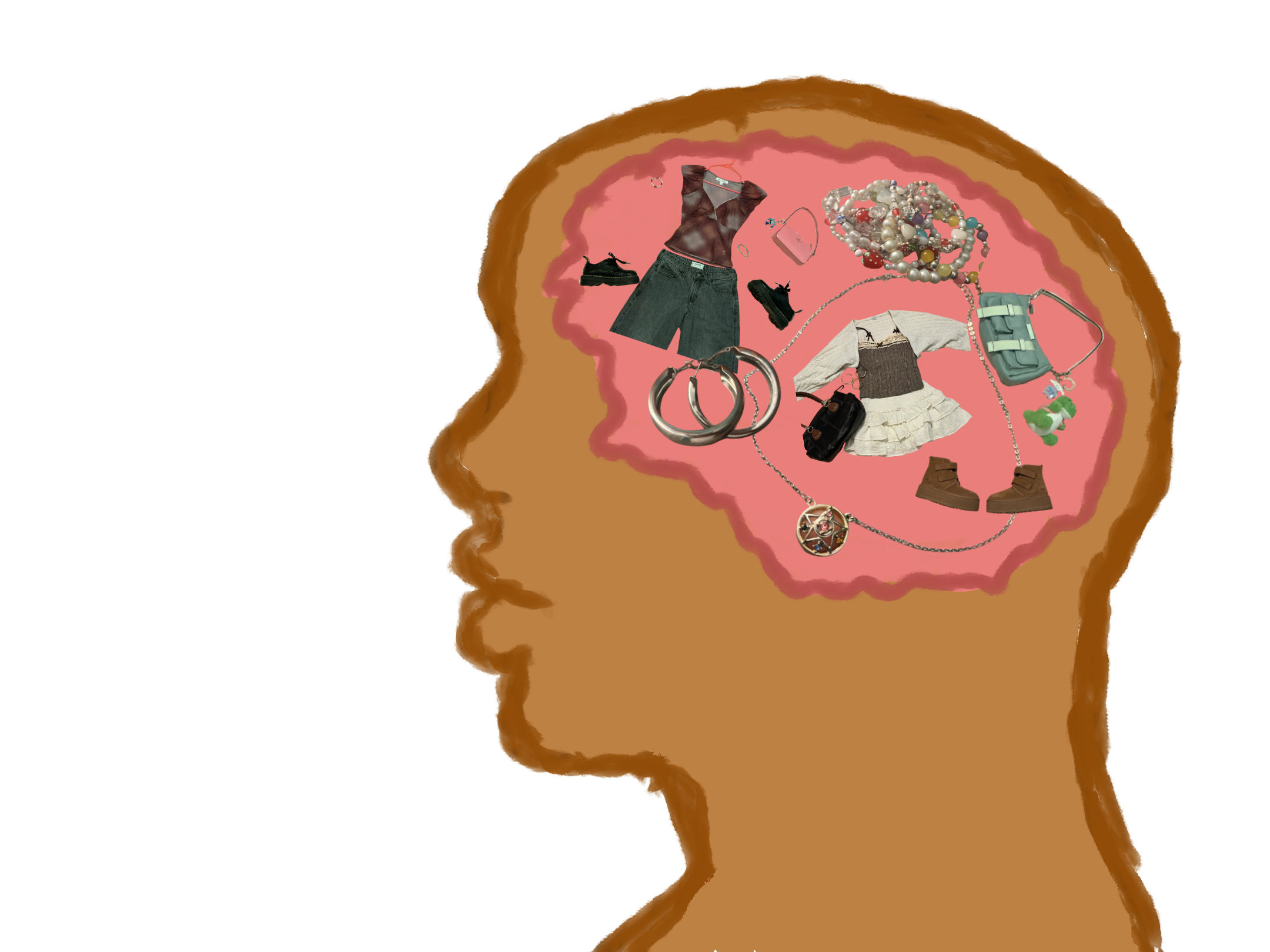
At what point can self-expression depend on inspiration?
Opinion by AndreaNyamedi
Imagine a world where personal style didn’t exist. It may be hard to see. It’s understandable; in American society, our personalized physical appearance dominates every aspect of life. Take the character Regina George from “Mean Girls,” for example: her polished, chic and, most of all, trendy sense of style entrances everyone around her.
Now, imagine placing her in this simulated world. Without the glamorous getup, she is stripped down to a manipulative and self absorbed shell. Although a world like this would be great for revealing people’s true natures, it would be horribly boring for fashion enthusiasts; I myself am a lover of jewelry and fabrics. Nonetheless, there is a serious conversation to be had in our generation about what people really consist of without the protection of their cloth armor.
At alarmingly fast rates, originality in style is slipping away. This isn’t a new issue of this decade, or even of this century. Fashion has always been and will always be what it is—full of trends and people that follow them. But what’s unique about our age’s tendency to chase these trends lies in the amount of inspiration available to us, and how we use it.
I see this largely in the way that we consume the ever-growing social media world. Apps like TikTok, Pinterest and Instagram allow users to take reference from creators, who often become starting points for people who want to dress similarly. Inspiration when used this way is perfectly healthy for developing an individual style. Note the words “starting points.” There is a thin line between this and copying, and Gen Z members are serial oversteppers of it.

It raises the question: if your ‘inspo’ is all that you rely on to construct every outfit, every day, can it really then be called your own? To me, abandoning original thought for a fit just goes too far.
Character also plays a critical part in this problem. I find it helpful to view this as a spectrum. On one end, there are people whose styles reflect little of themselves. Trend culture often pushes this onto us by encouraging youth to build wardrobes around certain aesthetics, such as the “clean girl” or the “earthy” style. This has two problematic effects. It encourages our generation to prioritize buying clothing for aesthetics, rather than what we may actually value or support. It also conditions people to be more dismissive of those who partake in fashion subcultures with distinct philosophies, such as punk or gyaru, a fashion subculture in Japan that rejects conventional Japanese beauty standards.
At the same time, it can be dangerous to lie on the other side of the spectrum, where style holds too much influence on personality. Consider the case of popular fashion influencer Jaida Bunni, who accused another creator of copying the hairstyle liberty spikes from her. Besides the fact that said hairstyle dates back decades and in no way could have come from her, she shows how vital it is to never let our sense of style dictate how we treat others.
Let’s not forget the fast fashion industry, perhaps the biggest influence in this issue. With every trending piece easily a click away, it can be tempting to buy in bulk from stores like Fashion Nova and SHEIN. Still, fast fashion takes away what I believe is essential in personal style: substance.
Substance is what makes outfits look and feel special. Unlike a polyester top, clothing and jewelry with sentimental value lasts. So while it isn’t illegal to indulge in the occasional micro trend, exclusively doing so is a disservice to both your closet, wallet and yourself.
Prioritizing personality may seem impossible in a world so quick to judge what we wear. Despite this, I urge you to try.
When you feel like giving in to conformity or microrends, remember that every Pinterest icon took years to build their closet; It’s likely yours will too. In time, your decision to choose individuality may become someone’s greatest inspiration.

Leave a Reply