
AndreaNyamedi
Halloween has certainly put a spell on Americans. In surveys by Statista.com, the amount of people who planned to participate in Halloween activities since the pandemic has steadily averaged to more than 70 percent of the American population. That is at least 240 million celebrators each year. But what about that other 30 percent? In the diverse salad bowl that is American demographics, many have traditions during the spooky season that reflect their cultural and religious backgrounds. Some celebrate separate holidays, while others completely reject participating in Halloween. As the Halloween season comes to a close, seasonal holidays for many are just getting started.
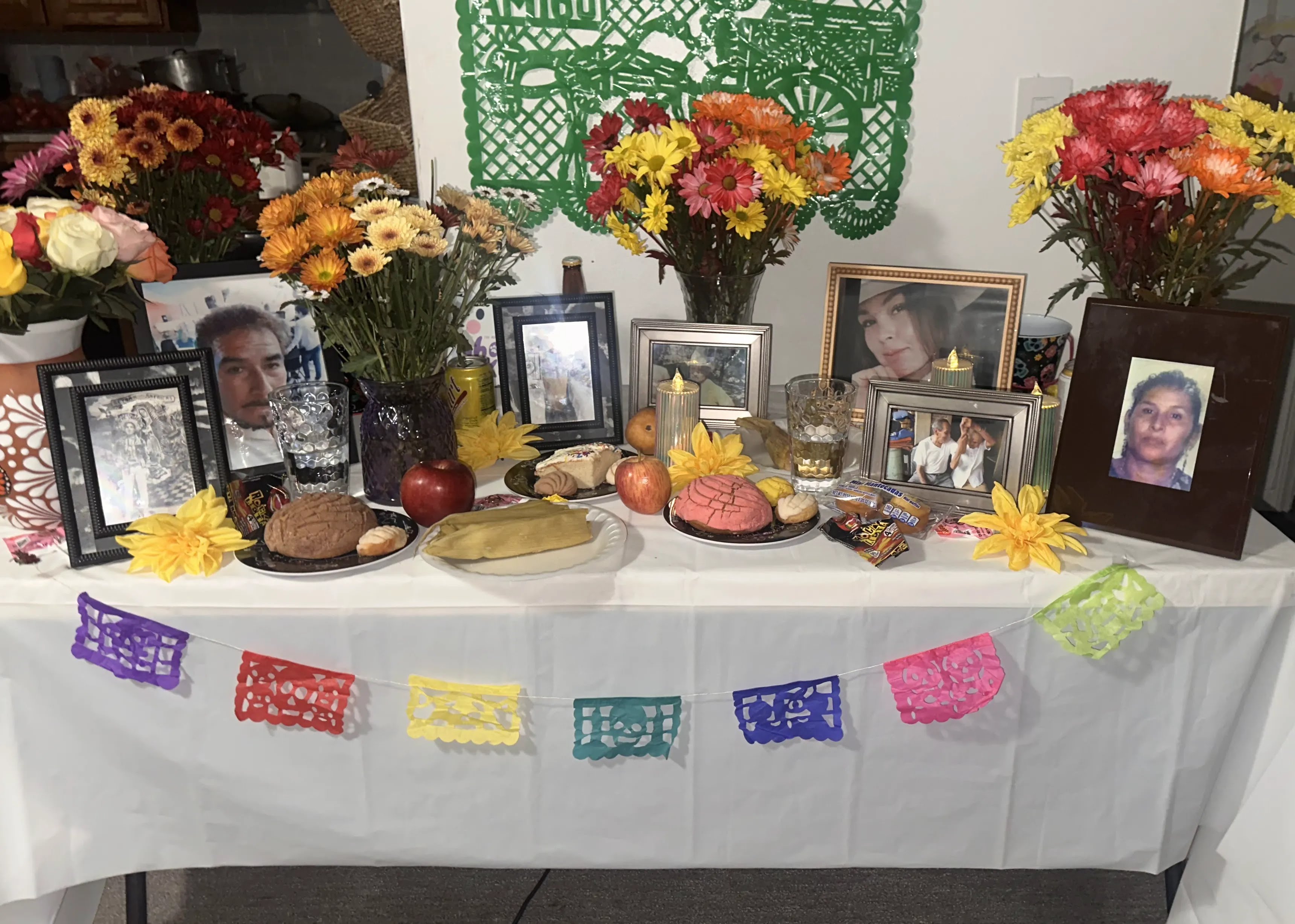
El Día de los Muertos, translated to English as “Day of the Dead,” is one such holiday that begins on Oct. 31 and ends at the very beginning of November. A multi-day Mexican holiday, Day of the Dead is celebrated all over Latin America and the United States, centered around family and remembrance.
Mexican American student Jazlin Rodriguez-Sanchez ’27 celebrates every year with her family. “When I was young, my mom always taught me that Day of the Dead was when we had put our family that passed away on a little altar with flowers,” she said.
These homemade altars, called “ofrendas,” welcome their loved ones from the spirit world through offerings. “We usually offer conchas, which is a type of bread with sugar on it,” Rodriguez-Sanchez said. “It’s also little stuff that represents relatives. For my uncle, he liked to drink fruit punch Jarritos, so we just put a little drink there, and then my aunt really liked lilies, so we would put her favorite flowers on there.”
Similarities to Halloween are drawn from the clothing and food eaten at this time. According to history.com, individuals who participate in parades and festivals wear skeleton masks, costumes and face paint. Much traditional clothing worn is modeled after the recognized figure “La Calavera Catrina.” “People get dressed up as her in big dresses with flowers all over them because she is the beauty of Day of the Dead,” Rodriguez-Sanchez said. Skull candies made from pure sugar are also a common delicacy eaten during this time.
Although these traditions are sometimes seen in American culture as a version of Halloween, Rodriguez-Sanchez emphasizes that misconceptions like this are never the real truth behind El Día de los Muertos. “It’s sad that people think it seems scarier than it is, or say they’re summoning evil spirits. It’s actually just summoning loved ones,” she said. “It goes off what you believe in; it feels like family members have come and actually taken what we have offered for them.”
Aside from the families who originate from other nations and celebrate separate holidays, many others choose to embrace America’s Halloween season.
Senior Vasudha Santhanam, an Indian American student, explains her experience growing up as a Hindu and participating in Halloween. “Trick or treating was the same for us as Americans,” Santhanam said.
“With assimilation and accommodation, there’s some Indians who practice Halloween, Christmas and other celebrations. It’s all pretty similar. We just don’t really know much about its meaning or in the context of the Catholic Church.”
Halloween’s popularity, although vast, isn’t received by everyone. Several Christian denominations discourage and even outright reject the holiday as part of their beliefs. “Jehovah’s Witnesses don’t celebrate Christmas, Halloween or birthdays,” said theology teacher Mr. Mark Koesters, who grew up unable to celebrate due to few people in his rural neighborhood. “I feel sad for the children, mainly because it’s a misunderstanding of Scripture and the history of everything.”
Koesters explained that the reason some Christians denounce Halloween lies in their views of Biblical scripture. “They think it’s from the devil. When my wife and I moved to our second house, the people across the street were very Biblical fundamentalists. And on Halloween, they actually put up a sign that said, ‘we do not celebrate Halloween, it’s from the devil,’” Koesters said. “I respect them for their views, but I felt sorry for their child. They’re so focused on obeying words that they’re missing the fun of life.”
The full list of cultural celebrations in the fall is extensive. Each brings a distinct, rich element to the season and serves as a reminder that there is always something worth exploring outside of one’s own culture.


Leave a Reply