
Hear It From Marielle
Opinion By J1 Student Marielle Kolterman

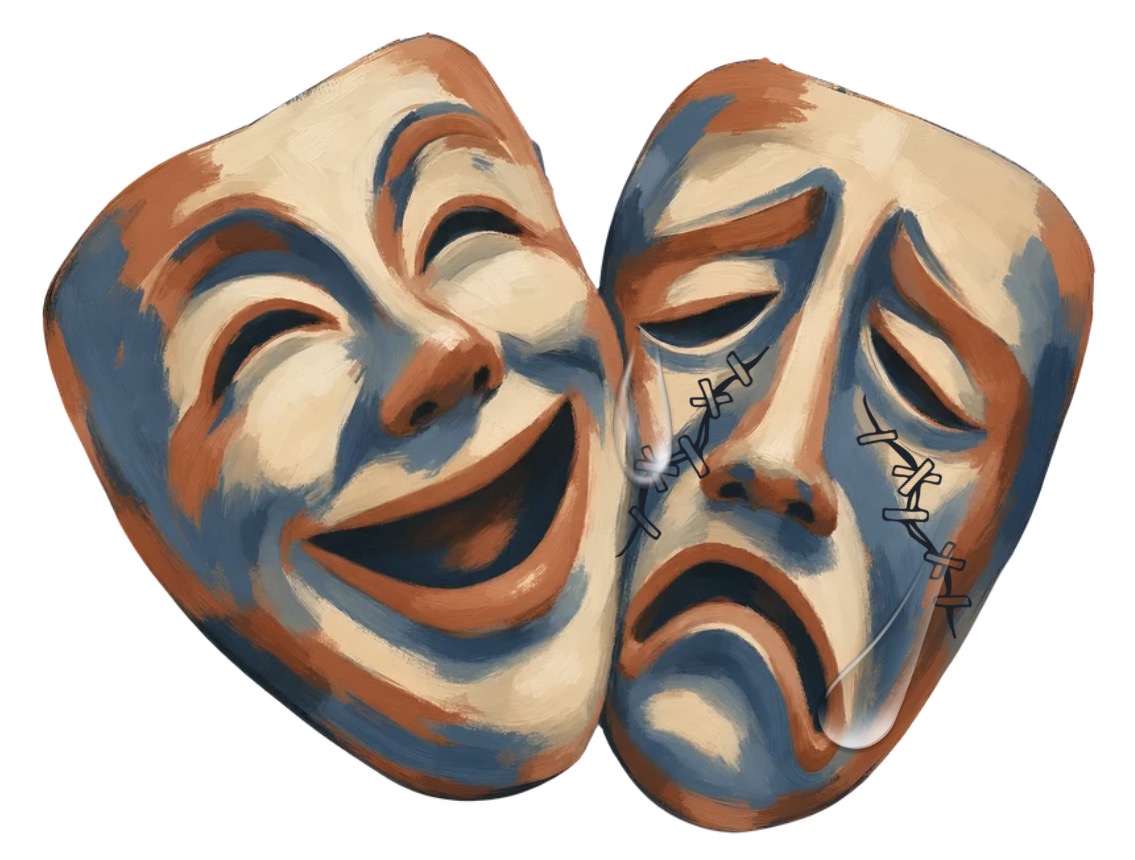
You cannot play a saxophone if it has been folded in half and crushed. This is what my choral director has always told members of the choir when they sing without good posture. For actors, their instrument is their face. Usually, a good actor is determined by the emotional conveyance of their voice and of their face. Plastic surgery and Botox strip this ability from actors, robbing them of their instrument.
Celebrities, with ever persistent paparazzi and internet surveillance, are pressured to constantly look their best. The current beauty standards, afraid of aging, force some to turn to Botox to reverse or prevent wrinkles.
The purpose of these cosmetic procedures is to alter the person’s physical appearance, often to make them look younger. Botox literally freezes your face and tightens the skin, to mimic a more juvenile expression.
As a result, faces with Botox are often recognizably the same. Additionally, Botox and plastic surgeries limit facial expressions other than the one that is frozen to the face and movements become harder to make.
I am not against plastic surgery or Botox as a whole. I believe that a person should be able to do with their body as they please. However, when watching a movie that takes place in the 19th century, with beautiful Victorian costumes and time period accurate housing and sets, it is distracting to see someone with an “iPhone face.” This term is frequently used to describe the copy and paste look of people in the past several years. I am completely removed from the scene and unable to focus on the minor beauties of the movie when there is such a modern looking face blocking the view.
In other examples, Botox affects a person’s ability to control the muscles in their face. Someone without adequate hearing goes through the world with only their vision. They focus on facial expressions and magnitude of actions to convey subtext, rather than dramatic music or tone setting sound effects. When an actor goes through these cosmetical procedures, they are sometimes unable to convey anything with their face.
There are three main facial neuromuscular systems, and although they have different jobs, they all work together for one goal: portraying inside brain concepts on the human face. The facial nerve is one of those systems, and the one most responsible for emotion. The nerve sends signals from the brain telling the muscles to contract and Botox blocks the facial nerve from sending those signals. If an actor wants to contract any muscle on their face, they have to actively fight the Botox.
As a result, an actor cannot convey emotion or expressions that tell a big part of their story. And while I am left distracted and frustrated, people of the deaf community are completely shut out of the story.
Although it is not the same, one way to comprehend this separation of communication is through Millie Bobby Brown’s character “Eleven” in “Stranger Things.” Her character is relatively mute and slowly picks up broken English throughout the story. So, she relies mainly on facial expressions to convey her character. In the first four seasons, Brown was overtly praised for the wonderful job on the character. However, before the fifth season, the actor looked physically altered and there was much debate on whether she had gotten work done, though Brown has never confirmed getting any facial procedures.
This emotional monster of a character was then limited to almost one facial expression. It was like there was a robot standing in for the role. Specifically, there was a scene between her and her father that was supposed to be heart-wrenching and tear-jerking, but instead I was just left frustrated at her lack of expression. Although I loved Eleven’s character, I could not get past how distinctly different the two people were. She was previously known for the rawness of emotions felt and how those directly tied to her powers, but then similar to how Eleven lost her powers in the show, Brown lost her power of conveying emotion.
The Hollywood industry proposes a harsh dilemma. Actors face a constant pressure to fight aging so that they can fit into beauty standards and compete for more roles. As soon as they receive a facial procedure however, the internet scrutinizes them for the answers behind their secret alterations. Additionally, as actors get work done, they are actively robbing themselves of the assets that set them apart from others.
Every role that a person plays on Earth has a purpose, and for artists, that purpose is to surpass the surface of a person and connect to their soul. We go to movies to feel things, pain, heart-break, laughter, and love. With a constant pressure to erase every sign of aging, actors also erase the portrayal of human emotion. In characters, an audience doesn’t seek perfection, they seek reality. They want to experience life through the lens of another flawed being like themselves, who feels and breaks. Instead of reversing the effect of life, by conforming to beauty standards, actors are breaking their instrument, cutting the tie to our souls.



Leave a Reply