
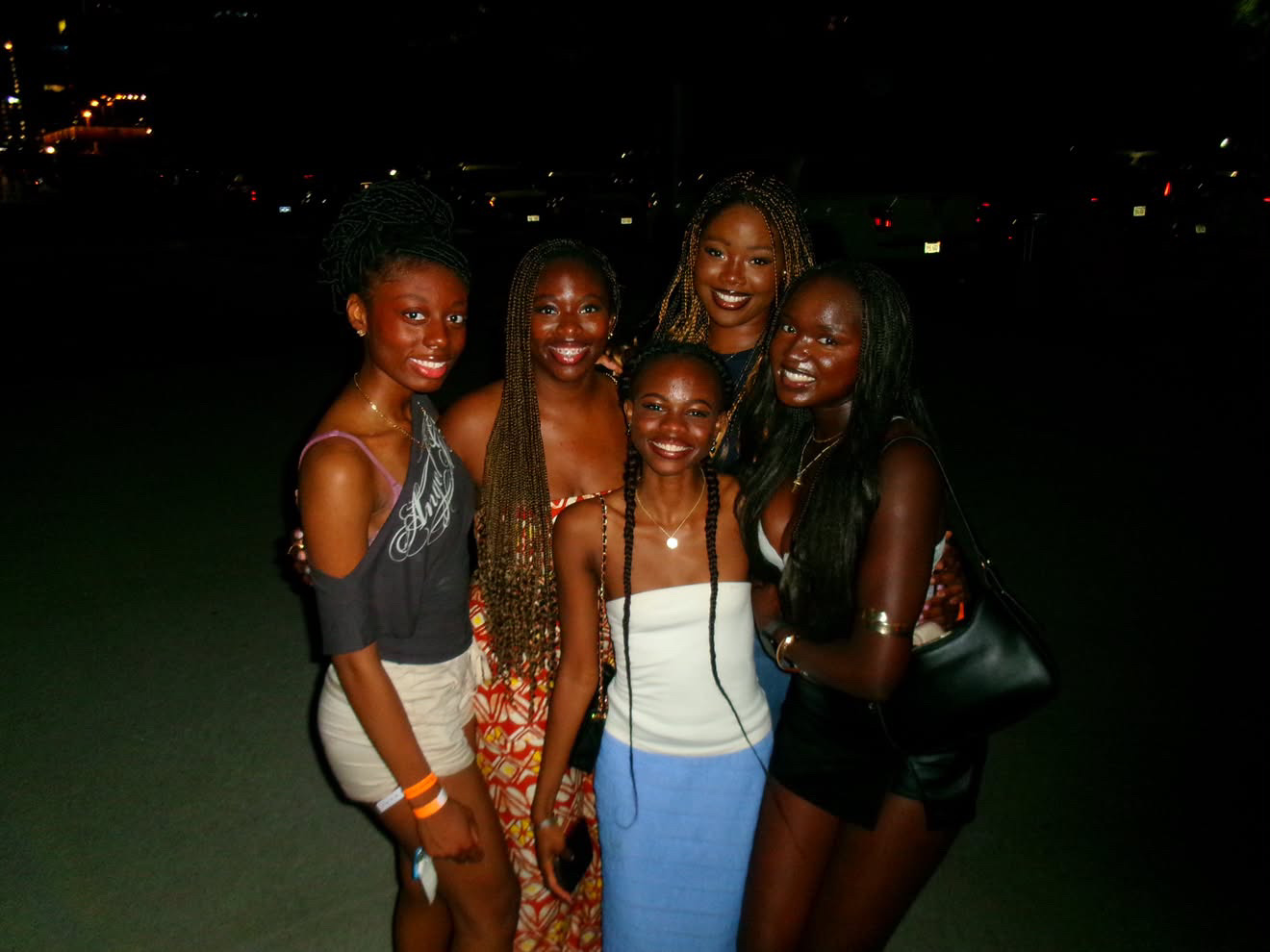
People and tents draped in bright earthy tones, the rhythmic pulse of Afro-centric beats, and a brew of savory sweet aromas fill the air in downtown Omaha. The scene illustrated is none other than Afro Fest, Omaha’s annual festival of African heritage and creativity. This event aims to create a space for the rich ethnic communities across Nebraska to unite once a year and celebrate Africa’s diversity.
Since 2018, it has gradually succeeded in attracting large crowds, including Marian graduates. Now transitioning into adulthood, these alumnae attended the event to explore networking opportunities, enjoy live music and food, and embrace their shared African backgrounds with their community.
Live performances are unmistakably the centerpiece of Afro Fest. This year’s headliner was Ruger, an internationally known Afrobeats singer with 5 million monthly Spotify listeners. Jaeda Lawson, Class of 2025 and a 5-time Afro Fest attendee, recalls her excitement upon attending his concert with her former Marian friends, Diane Koumaka and Lorda Womas. “I was near the front [of the stage] where everybody was singing and dancing together, so that was fun,” Lawson said. “To be able to watch such a popular artist for $45 is also really cheap, and some people could definitely be more grateful for it.” Alongside Ruger, Lawson enjoyed the festival’s lineup which included local artists, dancers, and Afrobeats DJs such as DJ Prince.

Among Afro Fest’s wide demographic of performers, volunteers and attendees, are its vendors. These majority Black-owned and local businesses sold products ranging from West African-style food to waist beads. “One vendor had a scavenger hunt to get free food at the end as well,” Lawson remembers.
Organizations also had a chance to promote themselves at the marketplace. Casteria Agbeletey ‘26, who’s been involved in the event since middle school, came this year to support her sister who represented the Nebraska Commission of African Affairs. “NCAA is involved in helping small businesses in Nebraska who are primarily of African American descent, but also everyone in the community. If something affects African Americans, it affects everyone else.”
Agbeletey said it’s important to have events like Afro Fest that make services more accessible. “In Omaha, it’s kind of hard to know about the people who are there to help you. With things like this people can know ‘Oh, this is cheaper data and internet you can get. This is how you can apply to become an engineer.’”
In addition to these services, the marketplace served as a great resource for networking. Professional organizations like Pfizer and Nebraska Medicine gave her and other young Black professionals a glimpse into the professional world. “Since I’m interested in medicine, I got to network and meet with people who can kind of tell me the next steps to take to get ahead in my career now that I’m in college,” she said.
Perhaps the greatest part of Afro Fest was how it celebrated people of multiple cultures together through dance and music. During the concert sets, DJs would interact with the crowd by calling out countries people came from. “They’d say ‘if you’re from Ghana, or if you’re from Nigeria, sing out loud!’ And then they would play music that resonates with those cultures,” Agbeletey said. Both her and Lawson agree that this not only hyped everyone up, but made people feel seen.
“Oftentimes, when people think of Africa, they mostly think of Western African countries, but they include Central, Northern, Eastern and Southern Africa as well,” Lawson said. “I think that was really inclusive, and it felt like my culture was embraced too.”
The stage also showcased a wide variety of dancers. Viewers could enjoy fast-paced footwork of hip-hop style dance, and then experience the rhythm of more traditional African dances brought by groups such as African Culture Connection, who also performed during Marian’s Black History Month CAB last school year. Agbeletey remembers seeing the same group bring out a Zangebto dancer, which comes from a predominantly West African traditional ceremony where people who represent spirits are covered in layers of palm leaves, then spin and dance. “Everyone was so entranced by it, especially the people who aren’t a part of African culture. It was so interesting to see, and it showed how different our cultures can be, even though we’re so close to each other [in West Africa].”
The experiences of these alumnae demonstrate how even after nearly a decade, Afro Fest has continually fulfilled its mission of bringing communities together in celebration of Africa and its people. “It really lets you connect with other people you otherwise wouldn’t have had a chance to,” Agbeletey said.


Leave a Reply