
Commentary by Lilly Italia
Recently, music journalism has found itself in limbo. Audiophiles have been pushed away from receiving music news through publications and pulled towards consuming news content in short-form on social media platforms.
Camryn Jarusek, a music tech major at the University of Nebraska – Omaha says that “[her] algorithm keeps [her] up to date. Even though [she’s] not subscribed to publications, [she] still stays up to date with her favorite artists.”
As a result of this move away from traditional journalism, viewership and profit for these magazines and websites has been in decline.
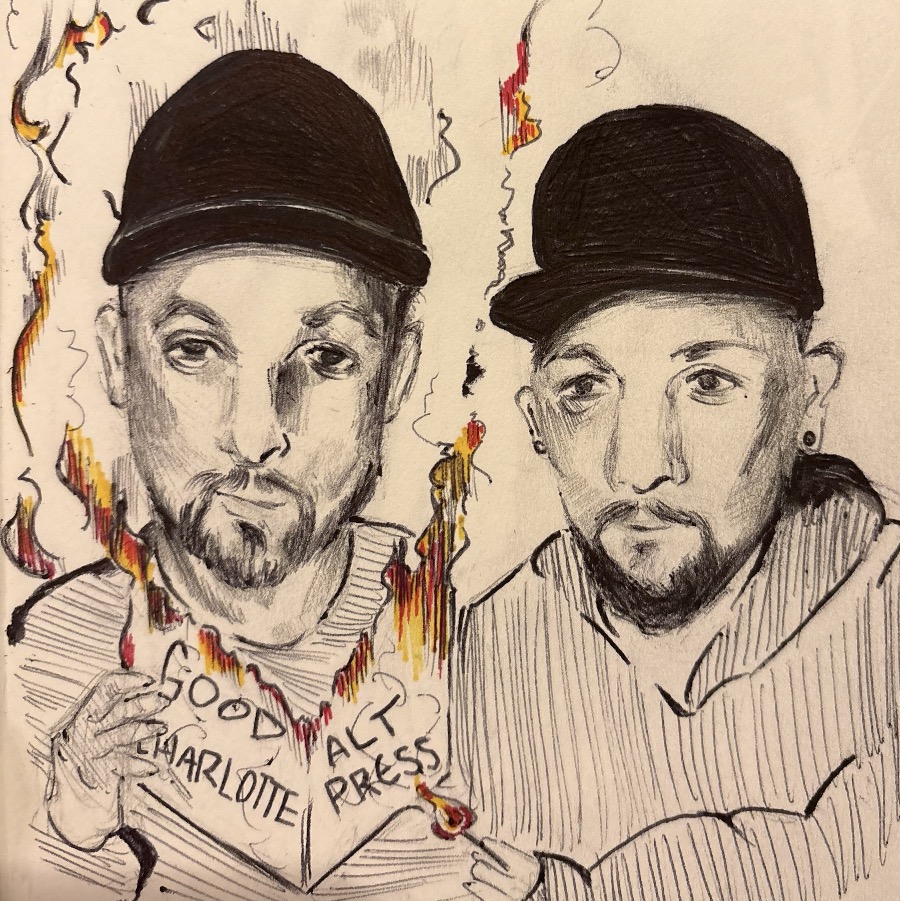
“Veeps,” a streaming platform for live music and concerts, founded by the alternative rockers Joel and Benji Madden of Good Charlotte, a popular punk and alternative rock band, has nearly completely gutted their editorial staffs at their four beloved publications.
“Alternative Press,” “Revolver,” “BrooklynVegan” and “Goldmine” still remain public online, however daily coverage of news in music has dwindled significantly for these publications since the layoffs in early August 2026.
Each of these four collectives covered a different sector of music for audio junkies.
“Goldmine,” which is the oldest of the four, was created in the 1970s to encapsulate music history and physical media collection. “Revolver” served as a publication for hard rock, heavy metal and hardcore movements in the alternative scene.
The two most prolific of the four, “Brooklyn Vegan” and “Alternative Press,” or “Alt Press,” covered indie and alternative rock, punk, emo, live music scenes and, ironically enough, the Madden brothers’ own, Good Charlotte.
These layoffs came after Live Nation Entertainment controversially acquired 51% ownership of Veeps in 2021.
As this news continues to spread, employees have come forward in critique of the Madden brothers and the management of Veeps and its respective publications.

For the music industry, publications, both physical and digital, have allowed for music fans to connect deeper with artists, songs and albums that they enjoy. The decline and eventual loss of these sources is a tragedy for both music fans and artists alike.
There is something special about real, long-form journalism. The publications under “Veeps” allowed for people, who were typically interested in alternative subcultures and media, to connect with and learn about their favorite bands.
Short-form content doesn’t offer the same amount of connection. People become reactive towards captions, which are often littered with clickbait, but scroll away from longer texts.
People will become less engaged with music news, and as a result, music as a whole, if there is not actual in-depth content regarding artists they enjoy.
Really, social media has breached music spaces.
The constant accessibility of mediocre “TikTok journalism” has dented the average person’s willingness for research — yes, this includes research as basic as reading an article.
Unfortunately, these cuts directly reflect the market’s dwindling demand for journalism as a whole, which poses an issue that expands beyond solely musical spheres.
Due to this, the publications that were once a haven for “alternative kids” have begun to vanish. All outlets under “Veeps,” especially “Brooklyn Vegan” and “Alt Press” will be not only missed but, as seen online already, mourned by readers who once found a home in music journalism.
Artists such as Paramore’s Hayley Williams and Circa Survive’s Anthony Green, along with many more well-known artists in alternative subcultures, have offered condolences toward the writers affected by these cuts.
Questions surrounding the future of independent and music journalism have only ramped up as a result of these cuts.

Leave a Reply